

Caustic soda — sodium hydroxide (NaOH) — is one of the most widely produced industrial chemicals in the world. It is a strong base that reacts with acids, fats, and many organic compounds, which is why it appears across such a broad range of industries: chemical manufacturing, pulp and paper, textiles, water treatment, food processing, and cleaning products. Understanding what caustic soda is, what forms it comes in, and where it is used is the starting point for anyone sourcing or specifying it.
Short answer: Caustic soda is sodium hydroxide (NaOH), a strong inorganic base available as flakes, pearls, or liquid solution. It is used as a pH adjuster, saponification agent, neutralizing agent, and chemical intermediate across dozens of industries. It is highly corrosive and requires appropriate handling precautions.
What Is Caustic Soda?
Caustic soda is the common industrial name for sodium hydroxide (NaOH). It is produced primarily by the chloralkali process — electrolysis of brine (sodium chloride solution) — which simultaneously produces chlorine gas and hydrogen gas as co-products. It is one of the top 10 most produced chemicals globally by volume, with annual production exceeding 70 million metric tons.
- Chemical name: Sodium Hydroxide
- Common name: Caustic Soda, Lye
- CAS number: 1310-73-2
- Chemical formula: NaOH
- Molecular weight: 40.00 g/mol
- Appearance: White solid (flakes, pearls) or colorless liquid (solution)
- pH (1% solution): ~13 (strongly alkaline)
- Solubility: Highly soluble in water (exothermic dissolution)
- UN number: UN 1823 (solid); UN 1824 (solution) | Hazard class: 8 (Corrosive)
Niran Chemical supplies Caustic Soda in flakes, pearls, and liquid grades with COA, MSDS, and TDS available for B2B buyers.
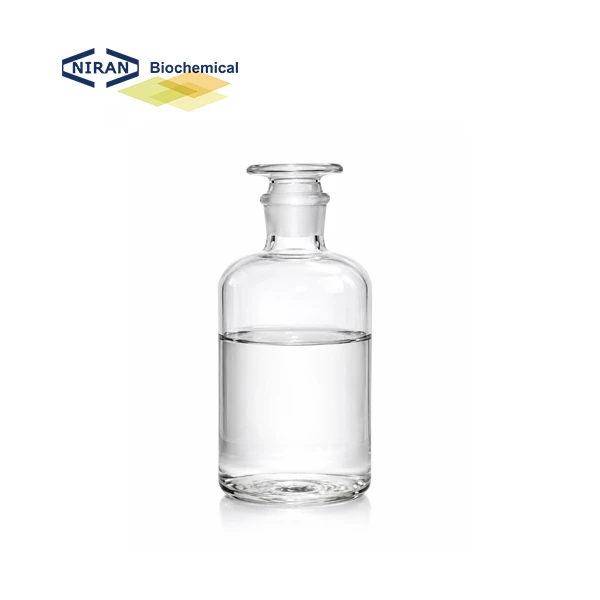
Physical Forms and Grades
| Form | Purity | Appearance | Primary Use | Key Advantage |
|---|---|---|---|---|
| Flakes | 98%–99% | Thin white flat pieces | Chemical manufacturing, soap making, water treatment | Easy to weigh and dose; dissolves quickly |
| Pearls / Beads | 98%–99% | Small white spherical granules | Pharmaceutical, food grade, laboratory use | Less dusty than flakes; easier to handle in automated systems |
| Liquid (50% solution) | ~50% w/w | Colorless to slightly yellow liquid | Pulp and paper, water treatment, large-scale industrial | No dissolution step required; easier for continuous dosing |
| Liquid (32% solution) | ~32% w/w | Colorless liquid | Water treatment, food processing | Lower concentration reduces handling risk; food-grade available |
The choice between solid and liquid forms depends primarily on logistics and application. Solid forms (flakes and pearls) have lower shipping weight and are preferred where storage space is limited or where precise dosing of small quantities is needed. Liquid solutions eliminate the dissolution step and are preferred for large-scale continuous processes where bulk delivery by tanker is practical.
Industrial Applications
Chemical Manufacturing
Caustic soda is a fundamental raw material in chemical synthesis. It is used to produce sodium salts of organic and inorganic acids, to neutralize acidic process streams, and as a reactant in the manufacture of detergents, surfactants, and specialty chemicals. The production of SLES (sodium lauryl ether sulfate) and other anionic surfactants involves neutralization with caustic soda. It is also used in the production of sodium hypochlorite (bleach) by reacting with chlorine gas.
Pulp and Paper
The pulp and paper industry is one of the largest consumers of caustic soda globally. In the kraft pulping process, caustic soda and sodium sulfide are used to break down lignin and separate cellulose fibers from wood chips. The resulting pulp is then bleached and processed into paper. Caustic soda is also used in the bleaching stage and in the recovery of chemicals from the pulping liquor.
Textile Processing
In textile manufacturing, caustic soda is used in the mercerization of cotton — a process that treats cotton fabric with concentrated NaOH solution to improve luster, strength, and dye uptake. It is also used in scouring (removing natural waxes and impurities from fibers), desizing, and as a pH adjuster in dyeing processes.
Water Treatment
Caustic soda is widely used in water and wastewater treatment for pH adjustment and neutralization. In drinking water treatment, it raises pH to reduce corrosivity and prevent lead and copper leaching from pipes. In industrial wastewater treatment, it neutralizes acidic effluents before discharge. It is also used in the regeneration of ion exchange resins in water softening systems.
Soap and Detergent Manufacturing
Saponification — the reaction of fats and oils with caustic soda to produce soap — is one of the oldest industrial applications of NaOH. Bar soaps are made by reacting animal fats or vegetable oils with solid caustic soda. Liquid soaps use potassium hydroxide (KOH) instead. Caustic soda is also used in the manufacture of synthetic detergents and cleaning products as a pH adjuster and neutralizing agent.
Food Processing
Food-grade caustic soda (meeting food additive specifications) is used in several food processing applications. It is used to cure olives (removing bitterness), to make pretzels and bagels (the characteristic brown crust comes from a caustic soda dip before baking), in the production of cocoa and chocolate (Dutch-process cocoa), and as a pH adjuster in various food manufacturing processes. Food-grade NaOH must meet strict purity specifications for heavy metals and other impurities.
Petroleum Refining and Mining
In petroleum refining, caustic soda is used to remove acidic impurities (hydrogen sulfide, mercaptans) from crude oil and natural gas streams. In mining, it is used in the processing of bauxite to produce alumina (the Bayer process), and in the extraction of certain metals from ores.
Safety and Handling
Caustic soda is highly corrosive and requires strict handling precautions:
- Corrosivity: Causes severe burns to skin, eyes, and mucous membranes on contact. Even dilute solutions can cause irritation. Use chemical-resistant gloves, eye protection, and protective clothing at all times.
- Exothermic dissolution: Dissolving solid caustic soda in water generates significant heat. Always add caustic soda to water — never add water to caustic soda — to prevent violent spattering.
- Hygroscopic: Solid caustic soda absorbs moisture from the air and can cake or become difficult to handle if not stored in sealed containers.
- Incompatibilities: Reacts violently with strong acids, water (exothermic), and certain metals (aluminum, zinc) to generate hydrogen gas. Keep away from flammable materials.
- Transport: UN 1823 (solid), UN 1824 (solution), Hazard Class 8 (Corrosive). Requires corrosive-rated packaging and appropriate labeling.
- Storage: Store in sealed, corrosion-resistant containers (HDPE, stainless steel). Keep dry and away from acids and reactive metals.
Frequently Asked Questions
What is caustic soda used for?
Caustic soda (sodium hydroxide) is used across a wide range of industries. Major applications include chemical manufacturing (as a reactant and neutralizing agent), pulp and paper production (kraft pulping process), textile processing (mercerization, scouring), water treatment (pH adjustment), soap and detergent manufacturing (saponification), food processing (curing, pH adjustment), and petroleum refining (removal of acidic impurities).
What is the difference between caustic soda flakes and pearls?
Both are solid forms of sodium hydroxide at similar purity (98%–99%). Flakes are thin, flat pieces that dissolve quickly and are easy to weigh. Pearls (or beads) are small spherical granules that produce less dust during handling and work better in automated dosing systems. The choice depends on handling preferences and application requirements — both perform identically once dissolved.
Is caustic soda the same as sodium hydroxide?
Yes. Caustic soda, sodium hydroxide, and lye are all names for the same compound: NaOH. “Caustic soda” is the common industrial name; “sodium hydroxide” is the IUPAC chemical name; “lye” is an older term used primarily in soap making.
What concentration of caustic soda solution is most commonly used industrially?
The 50% aqueous solution is the most widely traded liquid grade for industrial applications. It is the standard concentration for bulk delivery by tanker truck or rail car. The 32% solution is used where a lower concentration is preferred for safety or process reasons, and is common in water treatment and food processing applications.
Can caustic soda be used in food applications?
Yes, but only food-grade caustic soda that meets applicable food additive specifications (such as FCC — Food Chemicals Codex — in the US, or E524 in the EU). Food-grade NaOH has strict limits on heavy metals and other impurities. It is used in olive curing, pretzel and bagel production, Dutch-process cocoa, and as a pH adjuster in various food manufacturing processes.
What is the difference between caustic soda and caustic potash?
Caustic soda is sodium hydroxide (NaOH); caustic potash is potassium hydroxide (KOH). Both are strong bases with similar chemical properties, but they are used in different applications. Caustic soda is used for bar soap production; caustic potash is used for liquid soap and soft soap. Caustic potash is generally more expensive than caustic soda.
Conclusion
Caustic soda is one of the most fundamental industrial chemicals — its combination of strong alkalinity, high reactivity, and broad availability makes it indispensable across chemical manufacturing, pulp and paper, textiles, water treatment, food processing, and many other industries. The key sourcing decisions are physical form (flakes or pearls for solid applications, 50% or 32% solution for liquid applications) and grade (technical, food-grade, or pharmaceutical-grade depending on the application).
Niran Chemical supplies Caustic Soda in flakes, pearls, and liquid grades for industrial and food-grade applications, with full documentation available on request.