Sodium Lauryl Ether Sulfate — SLES, also written as Sodium Laureth Sulfate or AES — is the most widely used anionic surfactant in personal care and household cleaning products globally. It is the primary cleansing and foaming agent in the majority of shampoos, body washes, liquid soaps, and dishwashing liquids on the market. Understanding what SLES is, how it differs from related surfactants, and what grades are available is essential for anyone sourcing or formulating with it.
Short answer: SLES is an anionic surfactant produced by ethoxylating lauryl alcohol and then sulfating and neutralizing the result. It provides excellent foaming, effective cleansing, and good mildness compared to non-ethoxylated alternatives like SLS. It is available in 28% and 70% concentrations, with the 70% grade offering higher active content for cost-efficient bulk supply.
What Is SLES?
SLES is produced by reacting lauryl alcohol with ethylene oxide (ethoxylation), then treating the ethoxylated alcohol with sulfur trioxide (sulfation), and finally neutralizing with sodium hydroxide to produce the sodium salt. The number of ethylene oxide (EO) units added during ethoxylation — typically 2–3 EO for standard commercial grades — is what distinguishes SLES from SLS (Sodium Lauryl Sulfate, which has no EO units) and gives SLES its milder skin profile.
- INCI name: Sodium Laureth Sulfate
- Also known as: SLES, AES, Sodium Lauryl Ether Sulfate
- CAS number: 68585-34-2 (2EO); 9004-82-4 (general)
- Ionic character: Anionic
- pH (1% solution): 7.5 – 9.5
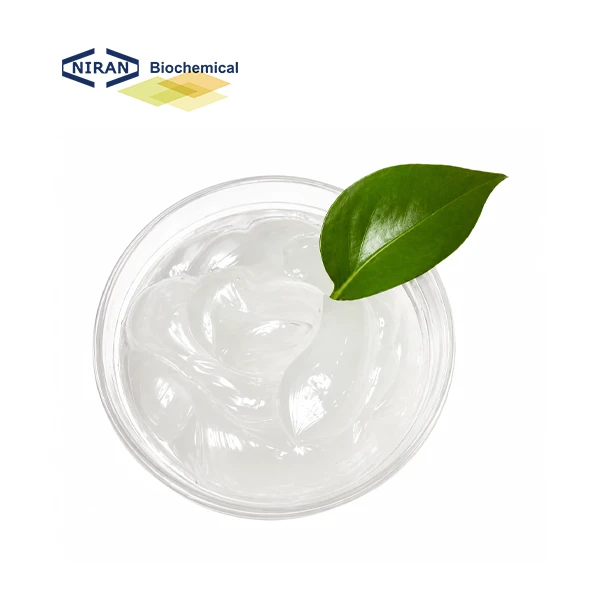
- Appearance: Clear to slightly hazy viscous liquid (28%); viscous paste (70%)
- Biodegradability: Readily biodegradable (>90% in standard tests)
Niran Chemical supplies SLES in 28% and 70% grades with COA, MSDS, and TDS available for B2B buyers.
SLES 28% vs SLES 70%: Which Grade to Choose?
| Parameter | SLES 28% | SLES 70% |
|---|---|---|
| Active content | ~28% w/w | ~70% w/w |
| Appearance | Clear to slightly hazy liquid | Viscous paste or gel |
| Handling | Easy — pumpable at room temperature | Requires heating to ~40–50°C for pumping |
| Shipping cost | Higher per kg of active | Lower per kg of active — preferred for export |
| Primary use | Direct incorporation in personal care manufacturing | Dilution before use; preferred for long-distance supply |
| Storage | Standard liquid storage | Heated storage recommended in cold climates |
The 28% grade is the standard for most personal care manufacturing operations — it can be pumped and dosed directly without heating. The 70% grade is preferred for export and long-distance supply because it contains 2.5× more active ingredient per liter, significantly reducing freight costs. Manufacturers receiving 70% SLES typically dilute it to working concentration before use.
Key Properties and Why They Matter
Foaming Performance
SLES produces abundant, stable foam — one of the primary reasons consumers associate it with effective cleaning. The foam is dense and long-lasting, which improves the sensory experience of shampoos and body washes. SLES foam is generally considered superior to SLS foam in terms of stability and consumer perception, though both produce excellent lather.
Cleansing Efficiency
As an anionic surfactant, SLES reduces surface tension and emulsifies oils, sebum, and dirt, allowing them to be rinsed away with water. Its cleansing efficiency is high across a range of soil types, making it effective in both personal care (removing sebum and styling products) and household cleaning (removing grease and food soils).
Mildness vs SLS
The ethoxylation step that distinguishes SLES from SLS significantly reduces skin irritation potential. The ethylene oxide units make the molecule more hydrophilic and less likely to penetrate and disrupt the skin barrier. SLES is consistently rated as milder than SLS in patch testing and clinical studies, which is why it has largely replaced SLS as the primary surfactant in modern shampoos and body washes.
Hard Water Tolerance
SLES performs better than SLS in hard water conditions. The ethoxylation reduces the tendency to form insoluble calcium and magnesium salts, maintaining cleaning and foaming performance even in high-hardness water. This is an important practical advantage in markets where hard water is common.
Viscosity Response to Salt
SLES-based surfactant systems thicken efficiently when sodium chloride (salt) is added — a property known as the salt curve. This makes viscosity adjustment straightforward in manufacturing: adding small amounts of NaCl to an SLES-based shampoo or body wash increases viscosity to the desired level without requiring additional thickeners. This is one of the most practically useful formulation properties of SLES.
Applications by Industry
| Application | Role of SLES | Typical Grade |
|---|---|---|
| Shampoo | Primary cleansing and foaming agent; removes sebum and styling product residue | 28% |
| Body wash / shower gel | Primary surfactant; generates dense, stable lather; removes skin oils and dirt | 28% |
| Liquid hand soap | Primary cleansing agent; effective against oils and bacteria when combined with antimicrobials | 28% |
| Dishwashing liquid | Primary surfactant for grease removal and foam generation | 28% or 70% |
| Laundry detergent | Co-surfactant alongside LABSA or AOS for soil removal | 70% (for dilution) |
| Industrial cleaning | Wetting and emulsification in hard surface cleaners and degreasers | 70% (for dilution) |
| Toothpaste | Foaming agent (less common than SLS for this application) | 28% |
SLES is almost always used in combination with secondary surfactants and foam boosters. Common combinations include SLES + CAPB (Cocamidopropyl Betaine) for mildness and foam stability, SLES + Cocamide DEA for foam boosting and viscosity, and SLES + AOS for enhanced cleaning performance. For a comparison of SLES against other primary surfactants, see our article on SLES vs SLS vs ALS.
SLES vs SLS: The Key Differences
SLES and SLS (Sodium Lauryl Sulfate) are closely related but not interchangeable. The ethoxylation step in SLES production makes a significant practical difference:
- Mildness: SLES is significantly milder on skin than SLS. This is the primary reason SLES has become the dominant surfactant in modern personal care — consumer demand for milder products has driven the shift away from SLS in shampoos and body washes.
- Hard water performance: SLES performs better in hard water than SLS.
- Viscosity building: SLES responds better to salt thickening than SLS, making formulation easier.
- Foaming: Both produce excellent foam; SLES foam is generally considered more stable.
- Cost: SLES is slightly more expensive than SLS due to the additional ethoxylation step.
- 1,4-dioxane: The ethoxylation process can produce trace amounts of 1,4-dioxane as a byproduct. Reputable manufacturers control this through purification; buyers should verify 1,4-dioxane levels in the COA for products destined for regulated markets.
Frequently Asked Questions
What is SLES used for?
SLES is the primary surfactant in most shampoos, body washes, liquid soaps, and dishwashing liquids. It provides the cleansing and foaming performance that consumers associate with these products. It is also used in laundry detergents, industrial cleaners, and other water-based cleaning formulations.
What is the difference between SLES and SLS?
SLES (Sodium Laureth Sulfate) is the ethoxylated version of SLS (Sodium Lauryl Sulfate). The ethoxylation adds ethylene oxide units to the molecule, making it milder on skin, more tolerant of hard water, and easier to thicken with salt. SLES has largely replaced SLS as the primary surfactant in modern shampoos and body washes due to its milder profile.
What is the difference between SLES 28% and SLES 70%?
Both contain the same active ingredient — the difference is concentration. SLES 28% contains approximately 28% active sodium laureth sulfate and is the standard grade for direct use in personal care manufacturing. SLES 70% contains approximately 70% active ingredient and is used where higher concentration reduces shipping volume and cost. SLES 70% requires heating to pump and must be diluted before use.
Is SLES safe for use in cosmetics?
Yes. SLES is approved for use in cosmetics in all major markets including the EU, US, Japan, and China. The Cosmetic Ingredient Review (CIR) Expert Panel has assessed SLES and concluded it is safe for use in cosmetics at current concentrations. The main quality consideration for regulated markets is 1,4-dioxane content — buyers should verify this in the COA.
What is 1,4-dioxane in SLES and should I be concerned?
1,4-dioxane is a trace byproduct that can form during the ethoxylation process used to make SLES. It is classified as a possible human carcinogen. Reputable manufacturers control 1,4-dioxane levels through vacuum stripping during production. For products sold in the US (particularly California) and EU, buyers should verify 1,4-dioxane levels in the COA and ensure they meet applicable limits (typically <10 ppm for cosmetics).
Can SLES be used in sulfate-free formulations?
No. SLES is a sulfate — it contains a sulfate group in its molecular structure. “Sulfate-free” formulations by definition exclude SLES and SLS. Alternative surfactants used in sulfate-free personal care include sodium cocoyl isethionate (SCI), sodium lauroyl sarcosinate, alkyl glucosides, and amino acid-based surfactants.
Conclusion
SLES is the backbone of modern personal care and household cleaning formulations — its combination of effective cleansing, excellent foaming, good mildness, and straightforward formulation properties has made it the dominant primary surfactant globally. The 28% grade is the standard for most manufacturing operations; the 70% grade is preferred for export and cost-efficient bulk supply. The main compliance consideration for regulated markets is 1,4-dioxane content, which should be verified in the COA for each batch.
Niran Chemical supplies SLES in 28% and 70% grades for personal care, household cleaning, and industrial applications, with full documentation available on request.