Isopropyl alcohol (IPA) — also known as isopropanol or 2-propanol — is one of the most widely used industrial solvents and disinfectants globally. Its combination of fast evaporation, broad solvency, low toxicity relative to other solvents, and antimicrobial activity makes it useful across a remarkably wide range of applications. Understanding where IPA is used, at what concentration, and in what grade helps clarify both its commercial importance and its limitations.
Short answer: Isopropyl alcohol is used as a disinfectant and antiseptic in healthcare, a precision cleaner in electronics manufacturing, a solvent and carrier in pharmaceuticals and personal care, and a degreaser and surface preparation agent in industrial and automotive applications. The appropriate concentration and grade depend on the specific application.
What Is Isopropyl Alcohol?
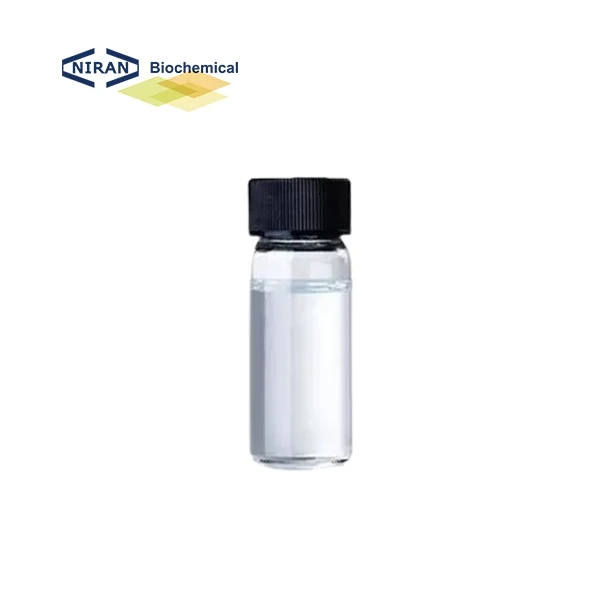
IPA is a secondary alcohol with the chemical formula C₃H₈O (or (CH₃)₂CHOH). It is produced commercially by hydration of propylene — either direct hydration or indirect hydration via sulfuric acid — and is available in concentrations ranging from 70% aqueous solutions to 99.9% anhydrous grades. It is fully miscible with water, ethanol, acetone, and most organic solvents, and is insoluble in salt solutions.
- INCI name: Isopropyl Alcohol
- CAS number: 67-63-0
- Chemical formula: C₃H₈O
- Boiling point: 82.6°C
- Flash point: 11.7°C (highly flammable)
- Solubility: Fully miscible with water and most organic solvents
- Common grades: Technical (industrial), USP/Pharmaceutical, Electronic (ultra-high purity)
Niran Chemical supplies Isopropyl Alcohol in multiple grades and concentrations for industrial, pharmaceutical, and personal care applications.
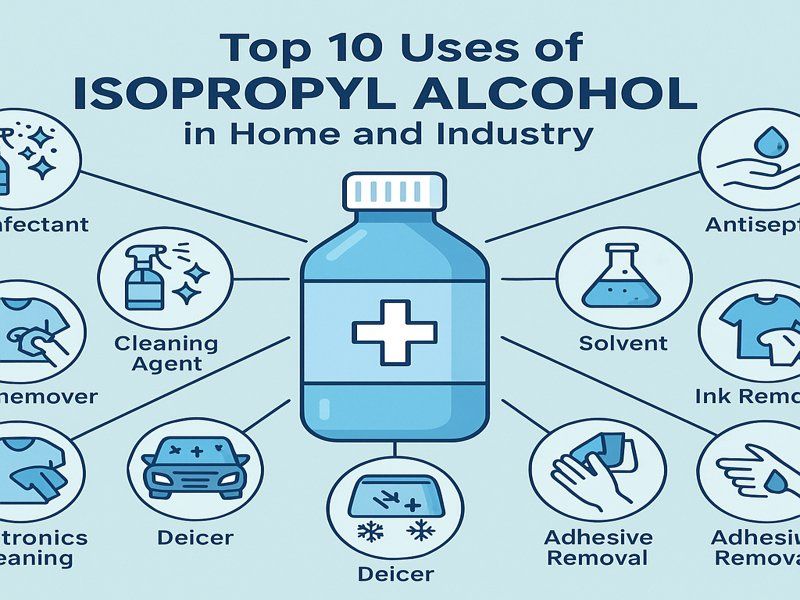
Isopropyl Alcohol Uses by Industry
| Industry | Primary Use | Typical Concentration / Grade |
|---|---|---|
| Healthcare / Medical | Skin antiseptic, surface disinfection, medical device cleaning | 70% aqueous (USP grade) |
| Electronics / Semiconductor | PCB cleaning, flux removal, precision component cleaning | 99%+ (electronic grade) |
| Pharmaceuticals | Solvent for APIs, excipient, cleanroom surface disinfection | USP grade; 70% or 99% depending on use |
| Personal Care / Cosmetics | Solvent, astringent, carrier for fragrances, antifoaming agent | Cosmetic grade; typically 70% or lower in finished products |
| Automotive | Surface degreasing, paint preparation, brake cleaner component | Technical grade; 91%–99% |
| Industrial Cleaning | Metal degreasing, adhesive removal, general surface cleaning | Technical grade; 70%–99% |
| Food Processing | Equipment sanitization (food-contact surfaces) | Food-grade; 70% aqueous |
| Printing / Inks | Ink solvent, plate cleaning, press maintenance | Technical grade |
| 3D Printing | Post-processing wash for photopolymer resins | 99% (anhydrous preferred) |
Key Applications Explained
Healthcare and Medical Disinfection
IPA’s most widely recognized use is as an antiseptic and surface disinfectant in healthcare settings. At 70% concentration, it is more effective at killing bacteria and viruses than higher concentrations — the water content slows evaporation, allowing sufficient contact time for the alcohol to denature microbial proteins and disrupt cell membranes. The CDC identifies 60%–90% alcohol solutions as the optimal bactericidal range.
In clinical settings, 70% IPA is used for skin preparation before injections, surgical scrubs, medical device cleaning, and cleanroom surface disinfection. It is effective against most bacteria, many viruses (including enveloped viruses such as influenza and coronaviruses), and fungi, but is not effective against bacterial spores.
Electronics and Semiconductor Manufacturing
The electronics industry is one of the largest industrial consumers of IPA. Its non-conductive nature, fast evaporation, and ability to dissolve flux residues, oils, and particulates without corroding metals make it the standard cleaning agent for printed circuit boards (PCBs), semiconductor wafers, optical components, and precision instruments.
Electronic-grade IPA (99.9%+ purity, ultra-low water and metal ion content) is required for semiconductor and microelectronics applications where even trace contaminants can cause device failure. Standard 99% IPA is used for general PCB cleaning and electronics maintenance. The near-zero water content ensures no moisture damage to sensitive components.
Pharmaceuticals and Cleanrooms
In pharmaceutical manufacturing, IPA serves multiple roles: as a solvent for active pharmaceutical ingredients (APIs), as a process solvent in tablet coating and granulation, and as the primary surface disinfectant in GMP cleanrooms. USP-grade IPA is required for all pharmaceutical applications, with strict limits on impurities including water content, non-volatile residue, and heavy metals.
Cleanroom disinfection typically uses 70% IPA (often sterile-filtered and packaged in sealed containers to prevent contamination) applied to surfaces, equipment, and gloves. The 70% concentration is specified in most pharmaceutical GMP guidelines for this purpose.
Personal Care and Cosmetics
In personal care formulations, IPA functions as a solvent, astringent, carrier for fragrances and active ingredients, and antifoaming agent. It appears in aftershaves, toners, setting sprays, nail polish removers, hand sanitizers, and certain serums. Its fast evaporation gives products a quick-dry, lightweight feel.
IPA is also used in cosmetic manufacturing as a process solvent and equipment cleaning agent. In finished products, concentrations are typically kept low (below 10%) in leave-on formulations to avoid skin dryness and irritation. Higher concentrations are used in rinse-off products and hand sanitizers (60%–80% for effective antimicrobial activity).
Industrial Cleaning and Degreasing
In industrial settings, IPA is used for metal surface preparation before painting or coating, adhesive and label removal, general degreasing, and cleaning of precision instruments and optical surfaces. Technical-grade IPA (91%–99%) is standard for these applications. Its fast evaporation leaves no residue, which is critical for surface preparation applications where residual contamination would compromise coating adhesion.
Automotive Applications
IPA is used in automotive manufacturing and repair for surface degreasing before painting, windshield de-icing, brake cleaner formulations, and interior surface cleaning. Its ability to remove oils, waxes, and silicone residues without damaging most automotive surfaces makes it a standard pre-treatment agent in body shops and manufacturing lines.
Concentration Guide: Which Percentage for Which Application?
| Concentration | Best For | Why |
|---|---|---|
| 70% (aqueous) | Healthcare disinfection, skin antiseptic, food equipment sanitization, cleanroom surfaces | Water content slows evaporation, maximizing contact time for microbial kill; optimal bactericidal range per CDC |
| 91% | Adhesive removal, general industrial cleaning, non-sensitive electronics, glass cleaning | Stronger solvent action than 70%; faster evaporation; still within effective disinfection range |
| 99%+ (anhydrous) | PCB cleaning, semiconductor manufacturing, 3D printing resin wash, moisture-sensitive applications | Near-zero water content prevents moisture damage to electronics; ultra-fast evaporation; no residue |
A common misconception is that higher concentration always means better performance. For disinfection, 70% outperforms 99% because the water content is essential for the antimicrobial mechanism. For electronics cleaning and moisture-sensitive applications, 99% is required precisely because water must be excluded. For general industrial cleaning and adhesive removal, 91% often provides the best balance of solvent strength and evaporation rate.
For a detailed comparison of IPA and rubbing alcohol — including how they differ in composition and appropriate use cases — see our article on the difference between rubbing alcohol and isopropyl alcohol.
Safety and Handling
IPA is classified as a flammable liquid (flash point 11.7°C) and must be stored away from heat sources, open flames, and oxidizing agents. Adequate ventilation is required in areas where IPA is used in quantity, as vapor accumulation creates both fire and inhalation hazards. At typical cosmetic and pharmaceutical concentrations, IPA is considered safe for topical use. Ingestion is toxic and should be treated as a medical emergency.
Key regulatory status: IPA is not classified as a carcinogen by IARC, EPA, or NTP. It is GRAS-adjacent for food equipment sanitization (with rinsing). USP-grade IPA is approved for pharmaceutical use. It is not approved as a direct food additive.
Frequently Asked Questions
What is isopropyl alcohol most commonly used for?
The most common uses are healthcare disinfection (skin antiseptic, surface cleaning), electronics cleaning (PCB and component cleaning), pharmaceutical manufacturing (solvent and cleanroom disinfectant), and personal care (solvent, astringent, hand sanitizer base). Industrial degreasing and automotive surface preparation are also major applications.
Is 70% or 99% isopropyl alcohol better for disinfection?
70% is more effective for disinfection. The water content slows evaporation and allows sufficient contact time for the alcohol to penetrate and kill microorganisms. Pure or near-pure IPA evaporates too quickly to achieve effective microbial kill. The CDC identifies 60%–90% alcohol as the optimal bactericidal range. Use 99% only for applications where water must be excluded, such as electronics cleaning.
What is the difference between technical grade and USP grade IPA?
Technical grade IPA meets general industrial purity standards and is suitable for cleaning, degreasing, and non-regulated applications. USP grade meets United States Pharmacopeia specifications with strict limits on impurities, water content, and non-volatile residue — required for pharmaceutical, medical, and cosmetic applications where product safety and regulatory compliance are mandatory.
Can isopropyl alcohol be used in food processing?
Yes, with restrictions. Food-grade IPA (70% aqueous) can be used to sanitize food-contact surfaces and equipment, provided surfaces are rinsed with potable water after application. IPA is not approved as a direct food additive and should not come into direct contact with food products.
Conclusion
Isopropyl alcohol’s combination of fast evaporation, broad solvency, and antimicrobial activity makes it one of the most versatile industrial chemicals in commercial use. The right concentration and grade depend entirely on the application — 70% for disinfection, 99% for electronics, USP grade for pharmaceutical and cosmetic use. Understanding these distinctions is what separates effective sourcing from costly misspecification.
Niran Chemical supplies Isopropyl Alcohol in technical, USP, and high-purity grades across multiple concentrations, with COA, MSDS, and TDS available on request.