Sodium lauryl sulfate (SLS) is one of the most widely produced and used surfactants in the world. It appears in personal care products, household detergents, industrial cleaners, oral care formulations, and laboratory reagents — a range that reflects its core properties: strong foaming, effective degreasing, low cost, and broad compatibility with other ingredients. Understanding where SLS is used, in what form, and how it compares to alternatives is useful for anyone sourcing or specifying surfactants across these industries.
Short answer: SLS is an anionic surfactant used primarily as a foaming and cleansing agent in personal care products (shampoos, body washes, toothpastes), as a primary surfactant in household and industrial detergents, and as a denaturing agent in laboratory applications. It is available in liquid (28% and 70% solutions) and powder (K12) grades depending on the application.
What Is Sodium Lauryl Sulfate?
SLS is the sodium salt of lauryl sulfate, produced by sulfating lauryl alcohol (derived from coconut or palm kernel oil) and neutralizing with sodium hydroxide. The result is an anionic surfactant with a 12-carbon alkyl chain — long enough to provide strong surface activity and foaming, short enough to remain water-soluble and easy to formulate.
- INCI name: Sodium Lauryl Sulfate
- Also known as: SLS, Sodium Dodecyl Sulfate (SDS), K12
- CAS number: 151-21-3
- Chemical formula: C₁₂H₂₅NaO₄S
- Molecular weight: 288.38 g/mol
- Ionic character: Anionic
- pH (1% solution): 7.5 – 9.5
- Critical micelle concentration (CMC): ~8.2 mM at 25°C
Niran Chemical supplies Sodium Lauryl Sulfate (SLS) in 28%, 70%, and K12 powder grades with COA, MSDS, and TDS available for B2B buyers.
Available Grades and What They Mean
| Grade | Active Content | Appearance | Primary Use |
|---|---|---|---|
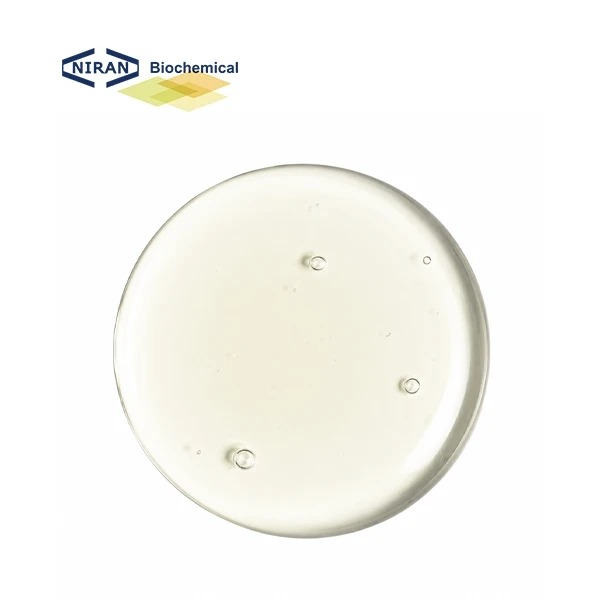
| SLS 28% | ~28% active | Clear to slightly hazy liquid | Personal care (shampoos, body washes), liquid detergents — easy to handle and dose |
| SLS 70% | ~70% active | Viscous liquid or paste | Industrial and commercial applications where higher active content reduces shipping volume |
| SLS K12 (powder) | ≥92% active | White powder or needles | Toothpaste, dry formulations, pharmaceutical applications, laboratory use (SDS-PAGE) |
Grade selection is primarily driven by the end application and handling requirements. The 28% liquid is the most common grade in personal care manufacturing due to ease of handling and direct incorporation into aqueous systems. The K12 powder is specified for toothpaste and pharmaceutical formulations where precise dosing and dry blending are required.
Applications by Industry
Personal Care and Cosmetics
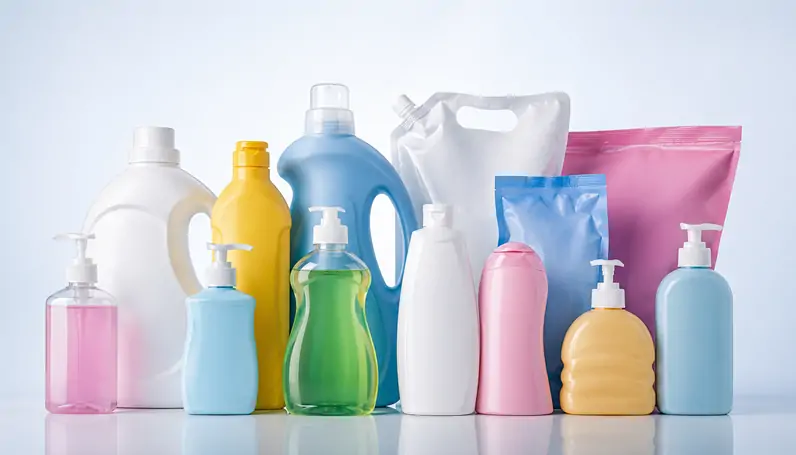
SLS is the most widely used primary surfactant in rinse-off personal care products. Its strong foaming and cleansing performance, combined with low cost and broad availability, make it the default choice for high-volume personal care manufacturing.
| Product Type | Role of SLS | Typical Grade |
|---|---|---|
| Shampoos | Primary cleansing and foaming agent; removes sebum, styling product residue, and environmental contaminants | 28% or 70% |
| Body washes and shower gels | Primary surfactant; generates dense, stable lather; removes skin oils and dirt | 28% or 70% |
| Facial cleansers | Cleansing agent in gel and foam cleansers; typically used at lower concentrations than shampoos | 28% |
| Toothpaste | Foaming agent and cleansing surfactant; helps distribute toothpaste across tooth surfaces and aids in removing food particles and plaque | K12 powder |
| Liquid hand soap | Primary cleansing and foaming agent | 28% or 70% |
| Bubble bath | Foam generation; primary surfactant | 28% |
In personal care, SLS is commonly used alongside secondary surfactants and foam boosters — such as Cocamidopropyl Betaine (CAPB) or Cocamide DEA — to improve foam quality, reduce irritation potential, and adjust viscosity. For a comparison of SLS against other primary surfactants used in personal care, see our article on SLES vs SLS vs ALS.
Household and Industrial Detergents
SLS is a primary surfactant in liquid and powder detergent formulations for household and institutional cleaning. Its strong degreasing performance and high foaming make it effective for removing oily soils from hard surfaces, fabrics, and dishes.
- Liquid laundry detergents: Used as a primary or co-surfactant alongside LABSA or SLES for soil removal and foam generation
- Dishwashing liquids: Provides grease-cutting performance and foam stability
- Hard surface cleaners: Effective against oily soils on kitchen surfaces, floors, and equipment
- Industrial degreasers: Used in concentrated industrial cleaning formulations for metal parts, machinery, and equipment cleaning
- Car wash products: Primary surfactant in vehicle cleaning formulations
For a broader comparison of surfactant options in detergent formulations, see our article on AOS vs LABSA vs SLS vs SLES.
Oral Care
SLS K12 powder is the standard foaming agent in toothpaste formulations globally. It generates the foam that consumers associate with effective cleaning, helps distribute the toothpaste across tooth surfaces, and contributes to the removal of food particles and surface stains. SLS is compatible with fluoride compounds and most abrasive systems used in toothpaste.
Typical use level in toothpaste: 0.5%–2.0% (as active SLS). Some sensitive-formula toothpastes use lower concentrations or substitute SLS with milder alternatives such as sodium cocoyl glutamate or sodium lauroyl sarcosinate.
Laboratory and Pharmaceutical Applications
SLS (commonly referred to as SDS — Sodium Dodecyl Sulfate — in laboratory contexts) is an essential reagent in biochemistry and molecular biology. Its primary laboratory application is SDS-PAGE (SDS-polyacrylamide gel electrophoresis), a standard technique for separating proteins by molecular weight. SDS denatures proteins and coats them with a uniform negative charge, allowing separation based solely on size.
In pharmaceutical applications, SLS K12 is used as a solubilizer and wetting agent in tablet formulations, as a surfactant in topical preparations, and as an emulsifier in certain pharmaceutical systems. It is listed in the US Pharmacopoeia (USP) and European Pharmacopoeia (EP) as an accepted pharmaceutical excipient.
Industrial and Specialty Applications
- Emulsion polymerization: SLS is used as an emulsifier in the production of synthetic latex, acrylic polymers, and other emulsion-based materials
- Textile processing: Used as a wetting and scouring agent in textile preparation and dyeing processes
- Agricultural formulations: Applied as a wetting agent and emulsifier in pesticide and herbicide formulations
- Construction chemicals: Used in concrete admixtures and foaming agents for lightweight concrete production
SLS vs SLES: Key Differences
Sodium Laureth Sulfate (SLES) is the ethoxylated version of SLS — produced by reacting SLS with ethylene oxide to add one or more ethylene oxide (EO) units to the molecule. This modification significantly changes the performance and application profile:
| Parameter | SLS | SLES (e.g., SLES-2EO) |
|---|---|---|
| Skin irritation potential | Higher | Lower (ethoxylation reduces irritation) |
| Foaming performance | Excellent — dense, rapid foam | Excellent — dense, stable foam |
| Hard water tolerance | Moderate | Better (ethoxylation improves tolerance) |
| Viscosity response to salt | Good | Excellent (easier to thicken with NaCl) |
| Cost | Lower | Slightly higher |
| Primary use | Toothpaste, industrial cleaning, cost-sensitive personal care | Shampoos, body washes, premium personal care |
| 1,4-dioxane concern | None | Trace levels possible (controlled by manufacturing) |
In modern personal care formulation, SLES has largely replaced SLS as the primary surfactant in shampoos and body washes due to its milder skin profile. SLS remains the standard in toothpaste (where its stronger foaming and compatibility with fluoride systems is valued) and in industrial and institutional cleaning where cost and cleaning performance take priority over mildness.
Safety Overview
SLS has been extensively studied and is one of the most well-characterized surfactants in the industry. The key facts:
- Skin irritation: SLS is a known skin irritant at higher concentrations or with prolonged contact. The Cosmetic Ingredient Review (CIR) Expert Panel has concluded that SLS is safe in rinse-off formulations used briefly and rinsed from the skin. For leave-on products, concentrations should not exceed 1%. The irritation potential is concentration- and contact-time-dependent — brief exposure in rinse-off products at typical use levels is well-tolerated by most individuals.
- Cancer: No credible scientific evidence links SLS to cancer. The American Cancer Society, Cancer Research UK, and the EU SCCS have all concluded there is no carcinogenic risk from SLS at cosmetic use levels.
- Biodegradability: SLS is readily biodegradable, breaking down by more than 90% within standard 28-day test windows. This is a favorable environmental profile compared to many synthetic surfactants.
- Regulatory status: Approved for use in cosmetics, pharmaceuticals, and food applications (as a food additive in the US; not permitted as a food additive in the EU) by major regulatory bodies globally.
Frequently Asked Questions
What is the difference between SLS and SLES?
SLES (Sodium Laureth Sulfate) is the ethoxylated form of SLS. Ethoxylation makes SLES milder on skin, more tolerant of hard water, and easier to thicken with salt. SLS has stronger foaming and is lower cost, making it preferred for toothpaste and industrial applications. SLES has largely replaced SLS as the primary surfactant in shampoos and body washes due to its milder profile.
What grades of SLS are available?
SLS is commercially available in three main grades: 28% aqueous solution (most common in personal care manufacturing), 70% solution or paste (used where higher active content reduces shipping volume), and K12 powder (≥92% active, used in toothpaste, pharmaceutical formulations, and laboratory applications).
Is sodium lauryl sulfate safe?
At concentrations used in rinse-off personal care products, SLS is considered safe by the CIR Expert Panel and major regulatory bodies. It is a known skin irritant at high concentrations or with prolonged contact, but brief exposure in shampoos and body washes at typical use levels is well-tolerated by most people. No credible evidence links SLS to cancer.
What is SDS in laboratory use?
SDS (Sodium Dodecyl Sulfate) is the same compound as SLS — the names are used interchangeably in different contexts. In laboratory settings, SDS is the standard term, particularly in reference to SDS-PAGE, the protein separation technique that uses SDS to denature proteins and give them a uniform negative charge for electrophoretic separation by molecular weight.
Conclusion
Sodium lauryl sulfate’s combination of strong foaming, effective degreasing, low cost, and broad regulatory acceptance has kept it as a foundational surfactant across personal care, detergents, oral care, and industrial applications for decades. Grade selection — 28%, 70%, or K12 powder — depends on the application and handling requirements. Where mildness is a priority, SLES is the standard modern alternative; where cost, foaming performance, or pharmaceutical-grade specifications are the priority, SLS remains the preferred choice.
Niran Chemical supplies Sodium Lauryl Sulfate (SLS) in 28%, 70%, and K12 powder grades for personal care, detergent, and industrial applications, with full documentation available on request.