

Cocamide DEA — also called CDEA, Cocamide Diethanolamine, or Coconut Fatty Acid Diethanolamine — has been a standard ingredient in shampoo formulations for decades. It is not a primary cleanser. Its job is to make the primary surfactant system work better: more foam, more stable lather, better viscosity, and a smoother rinse feel. For formulators sourcing ingredients for hair care products, understanding what CDEA actually does — and what the current regulatory picture looks like — is more useful than either dismissing it or overselling it.
Short answer: Cocamide DEA is a non-ionic surfactant derived from coconut oil and diethanolamine, used in shampoos as a foam booster, viscosity builder, and mild conditioner. It is effective and cost-efficient, but carries regulatory scrutiny in California and some EU markets due to nitrosamine formation concerns. Formulators in regulated markets are increasingly moving toward alternatives such as Cocamide MEA or Cocamide MIPA.
What Is Cocamide DEA?
Cocamide DEA is produced by reacting fatty acids derived from coconut oil with diethanolamine (DEA). The reaction yields a mixture of fatty acid diethanolamides — primarily lauric and myristic acid diethanolamides — with an amphiphilic structure: a hydrophobic fatty acid tail and a hydrophilic diethanolamide head group. This structure is what gives CDEA its surfactant properties.
- INCI name: Cocamide DEA
- CAS number: 68603-42-9
- Synonyms: Coconut Diethanolamide, CDEA, Cocamide Diethanolamine, Coconut Fatty Acid Diethanolamine
- HLB value: ~12.5 (suitable for O/W emulsification)
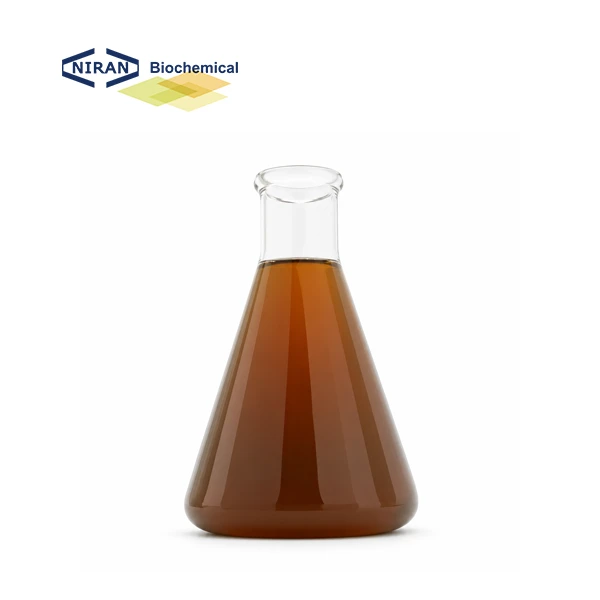
- Appearance: Amber to yellow viscous liquid or semi-solid
- pH stability: 4.0–10.5
CDEA is classified as a non-ionic surfactant, meaning it carries no net electrical charge in solution. This makes it compatible with anionic, cationic, and amphoteric surfactants — a key reason it integrates easily into most shampoo and conditioner systems. Niran Chemical supplies Cocamide DEA in standard grades for personal care and industrial cleaning applications.
How Cocamide DEA Works in Hair Care Products
| Function | Mechanism | Benefit in Hair Care |
|---|---|---|
| Foam boosting | Increases viscosity of liquid film around air bubbles, stabilizing foam structure | Richer, denser lather in shampoos; improved consumer perception of cleansing |
| Viscosity building | Interacts with anionic surfactants and electrolytes to thicken the system | Gives shampoo body and pourability; reduces need for additional thickeners |
| Co-surfactant | Works synergistically with primary anionics (SLES, SLS, AOS) to reduce surface tension | Improves overall cleansing efficiency and product spreadability |
| Mild conditioning | Deposits a thin film on hair surface during rinsing | Leaves hair feeling softer and smoother post-wash |
| Emulsification | Stabilizes oil-in-water emulsions via amphiphilic structure | Helps incorporate conditioning oils and fragrances into aqueous shampoo base |
In a typical shampoo system, CDEA is not the primary cleanser — that role belongs to anionic surfactants like SLES or AOS. CDEA’s value is in what it adds to the system: foam quality, texture, and a mild conditioning effect that primary surfactants alone cannot deliver. For a comparison of primary surfactant options in hair care, see our article on SLES vs SLS vs ALS.
CDEA also works well alongside amphoteric surfactants. When combined with Cocamidopropyl Betaine (CAPB) or Coco Betaine, it contributes to a milder, more balanced surfactant system with improved foam stability and reduced irritation potential compared to anionic-only systems. See our comparison of CAPB vs Coco Betaine for more on amphoteric surfactant selection.

Safety and Regulatory Status
This is the section that matters most for formulators making sourcing decisions in 2026.
The core safety concern with Cocamide DEA is nitrosamine formation. When DEA-based ingredients are present in formulations alongside nitrosating agents — including certain preservatives, nitrogen oxides from air, or other amines — they can react to form N-nitrosodiethanolamine (NDELA), a compound classified as a probable human carcinogen by IARC (Group 2B). The risk is not from CDEA itself in isolation, but from its potential to generate nitrosamines in finished formulations.
The regulatory picture by market:
- California (USA): Cocamide DEA is listed under Proposition 65 as a known carcinogen (added 2012). Products sold in California containing CDEA require a Prop 65 warning or must be reformulated. In February 2026, the Center for Environmental Health (CEH) filed legal action against Amazon, Target, and Walmart for selling 38 shampoos and hygiene products containing CDEA, signaling renewed enforcement pressure.
- EU: The EU Cosmetics Regulation restricts DEA-based ingredients in products that could form nitrosamines. CDEA is not outright banned but must meet strict nitrosamine limits, and many EU brands have proactively removed it.
- FDA (USA, federal): CDEA is not banned at the federal level. The FDA acknowledges nitrosamine concerns but has not issued a prohibition. Products can legally contain CDEA outside California without a warning.
- Other markets: No blanket prohibition in most Asian or Middle Eastern markets, though brand-level reformulation is increasingly common globally.
The practical implication for formulators: CDEA remains legally usable in most markets, but the regulatory trend is clearly moving toward restriction. Brands targeting California, the EU, or clean beauty positioning are reformulating away from CDEA. Brands in less regulated markets or industrial cleaning applications continue to use it for its cost-effectiveness and performance.
One mitigation approach used by some manufacturers: using high-purity CDEA with low free DEA content, combined with nitrosamine inhibitors (such as tocopherol or ascorbic acid) and avoiding co-formulation with nitrosating preservatives. This reduces but does not eliminate nitrosamine risk.
How to Choose: CDEA or an Alternative?
- Products sold in California or EU-regulated markets: Reformulate away from CDEA. Cocamide MEA (monoethanolamine) and Cocamide MIPA (isopropanolamine) deliver similar foam-boosting and thickening performance with significantly lower nitrosamine formation risk.
- Industrial cleaning products (not personal care): CDEA remains a cost-effective and high-performing option. Regulatory restrictions on nitrosamines apply primarily to cosmetic and personal care products.
- Shampoos for markets without Prop 65 exposure: CDEA is still widely used. Specify high-purity grade with low free DEA content and verify nitrosamine levels in the finished product.
- Sensitive skin or baby care formulations: Avoid CDEA regardless of market. The nitrosamine risk profile makes it unsuitable for products used on compromised or infant skin.
- Cost-sensitive formulations in non-regulated markets: CDEA offers a favorable cost-performance ratio compared to MEA or MIPA alternatives. It remains a practical choice where regulatory exposure is limited.
For formulators evaluating the full secondary surfactant landscape, Cocamide DEA product specifications, COA, and MSDS are available from Niran Chemical on request.
Frequently Asked Questions
What does Cocamide DEA do in shampoo?
CDEA functions as a foam booster, viscosity builder, and mild conditioner in shampoo formulations. It works synergistically with primary anionic surfactants (such as SLES or AOS) to produce denser, more stable lather, thicken the product, and leave hair feeling softer after rinsing. It is a secondary surfactant, not a primary cleanser.
Is Cocamide DEA safe to use in hair products?
CDEA is not banned at the US federal level or in most global markets, and it has a long history of use in personal care. However, it is listed as a known carcinogen under California Proposition 65 due to its potential to form nitrosamines in formulations. The EU restricts DEA-based ingredients in products where nitrosamine formation is possible. Formulators targeting these markets are increasingly using alternatives such as Cocamide MEA or Cocamide MIPA.
What is the difference between Cocamide DEA and Cocamide MEA?
Both are coconut-derived fatty acid amides used as foam boosters and thickeners. The difference is the amine component: DEA (diethanolamine) in CDEA, MEA (monoethanolamine) in Cocamide MEA. MEA-based amides have a significantly lower risk of nitrosamine formation, which is why Cocamide MEA is the preferred alternative in regulated markets. Performance is broadly similar, though CDEA typically provides slightly better viscosity building in anionic surfactant systems.
Why is Cocamide DEA being removed from shampoos?
The primary driver is California Proposition 65, which lists CDEA as a known carcinogen, and EU restrictions on DEA-based ingredients in cosmetics. In February 2026, the Center for Environmental Health filed legal action against major US retailers for selling products containing CDEA, increasing pressure on brands to reformulate. Many brands have proactively removed CDEA to avoid regulatory risk and align with clean beauty positioning.
Can Cocamide DEA be used in industrial cleaning products?
Yes. The nitrosamine-related restrictions apply primarily to cosmetic and personal care products. In industrial cleaning formulations — detergents, degreasers, hard surface cleaners — CDEA remains a widely used and cost-effective foam booster and thickener without the same regulatory constraints.
What are the best alternatives to Cocamide DEA in hair care?
The most direct functional alternatives are Cocamide MEA and Cocamide MIPA, which provide similar foam-boosting and thickening performance with lower nitrosamine risk. Cocamidopropyl Betaine (CAPB) can also partially replace CDEA’s function while adding mildness. The choice depends on the specific surfactant system, target pH, and desired viscosity profile.
Conclusion
Cocamide DEA is a technically effective ingredient for hair care formulations — its foam-boosting, thickening, and mild conditioning functions are well-established and cost-efficient. The regulatory picture, however, has shifted significantly, particularly in California and the EU, and the trend toward reformulation is accelerating. For formulators, the decision comes down to target market and regulatory exposure: CDEA remains viable in many markets and industrial applications, but brands with California or EU distribution should evaluate alternatives.