
Glycerin and D-Panthenol appear together in the ingredient lists of countless moisturizers, serums, and repair creams — often without any explanation of why both are there. They are both classified as humectants, both water-soluble, and both well-tolerated across skin types. But they are not doing the same job.
This article compares D-Panthenol and Glycerin from a formulation standpoint: how each works, where they differ, and how to use them together effectively. Written from a raw material supplier’s perspective, for formulators and product developers who need technical clarity.
Quick answer: Glycerin is a cost-effective, high-performance humectant that draws water rapidly through osmotic mechanisms and aquaporin channels. D-Panthenol is a provitamin that converts to pantothenic acid in the skin, supporting barrier lipid synthesis and wound healing alongside its humectant function. Glycerin hydrates faster and more intensely at the surface; D-Panthenol works more slowly but addresses barrier function at a structural level. Most well-formulated moisturizers use both.
1. Chemistry at a Glance
Glycerin (Glycerol)
Glycerin is a three-carbon polyol with a molecular weight of 92 Da — one of the smallest humectant molecules used in cosmetics. Its three hydroxyl groups give it exceptional water-binding capacity and make it fully miscible with water at any ratio. It is derived from vegetable oils (via saponification or transesterification) or synthetically from propylene oxide, and is available in both cosmetic and pharmaceutical grades.
At concentrations above 30% in a finished formulation, glycerin becomes noticeably sticky on skin. This is the primary formulation constraint — not a safety concern, but a sensory one that limits how much can be used in leave-on products without affecting consumer experience.
D-Panthenol (Provitamin B5)
D-Panthenol is the alcohol analogue of pantothenic acid (Vitamin B5), with a molecular weight of 205 Da. It is water-soluble and also slightly soluble in oils, giving it broader formulation flexibility than glycerin. The “D” designation matters: only the D-isomer is biologically active in skin. DL-Panthenol (the racemic mixture) is commercially available at lower cost but delivers roughly half the biological activity per gram.
Unlike glycerin, D-Panthenol is not just a humectant — it is a provitamin that undergoes enzymatic conversion in the skin, which is what gives it its additional functional properties beyond water retention.
2. How Each Works in Skin
Glycerin: Osmotic Humectancy and Aquaporin Activation
Glycerin’s primary mechanism is osmotic: it creates a concentration gradient in the stratum corneum that draws water from the atmosphere (in humid conditions) and from the deeper epidermal layers. What makes glycerin particularly effective is its interaction with aquaporin-3 (AQP3) — a glycerol-permeable water channel protein expressed in keratinocyte membranes. Glycerin upregulates AQP3 expression, facilitating both water and glycerol transport across cell membranes, which contributes to sustained hydration beyond simple surface moisture retention.
Glycerin also supports the natural moisturizing factor (NMF) — the mixture of amino acids, lactate, urea, and other hygroscopic compounds that maintain stratum corneum water-holding capacity. Clinical studies have shown glycerin’s hydration efficacy to be comparable to or exceeding that of hyaluronic acid at equivalent concentrations, at a fraction of the cost.
One practical limitation: in very low-humidity environments, glycerin can draw moisture from the deeper skin layers rather than the atmosphere, potentially increasing transepidermal water loss (TEWL) if not paired with an occlusive or barrier-supporting ingredient.
D-Panthenol: Barrier Repair via the CoA Pathway
D-Panthenol penetrates the stratum corneum and is oxidized by skin enzymes (pantetheinase and alkaline phosphatase) to pantothenic acid. Pantothenic acid is a precursor to coenzyme A (CoA), which is required for the synthesis of fatty acids — specifically the ceramides, cholesterol, and free fatty acids that form the intercellular lipid matrix of the stratum corneum.
This is the mechanism that sets D-Panthenol apart from other humectants: it does not just attract water, it helps rebuild the structural components that keep water from leaving. Additional documented effects include stimulation of fibroblast proliferation and epithelial migration (accelerating wound healing), mild anti-inflammatory activity, and direct humectancy through its own hydroxyl groups.
The barrier repair effect is slower to manifest than glycerin’s immediate hydration — typically 24–72 hours for measurable TEWL reduction — but it addresses the underlying cause of dryness rather than just the symptom.
3. Side-by-Side Comparison
| Parameter | Glycerin | D-Panthenol |
|---|---|---|
| Chemical class | Polyol (triol) | Alcohol analogue of Vitamin B5 |
| Molecular weight | 92 Da | 205 Da |
| Primary mechanism | Osmotic humectancy + AQP3 activation | CoA pathway → barrier lipid synthesis |
| Humectant function | Yes — strong, immediate | Yes — moderate, secondary to barrier repair |
| Barrier repair | Indirect (NMF support) | Direct (ceramide/lipid synthesis support) |
| Wound healing | No | Yes — stimulates fibroblast proliferation |
| Anti-inflammatory | Mild (osmotic) | Yes — documented in clinical literature |
| Onset of hydration | Immediate (minutes) | Gradual (hours to days for barrier effect) |
| Typical use level | 2% – 20% (leave-on); up to 30% in rinse-off | 0.5% – 5% |
| Sensory at high % | Sticky above ~15–20% in leave-on | Non-sticky at all use levels |
| Solubility | Water-miscible at any ratio | Water-soluble; slightly oil-soluble |
| pH stability | Stable across wide pH range | 4.0 – 8.0 |
| Cost | Low — commodity ingredient | Moderate — specialty ingredient |
| INCI name | Glycerin | Panthenol |
4. Sensory Profile and the Glycerin Stickiness Threshold
One practical consideration that rarely appears in ingredient comparison articles: glycerin’s sensory profile changes significantly with concentration. Below 5%, it is essentially imperceptible on skin. Between 5–10%, it contributes a slight slip and softness. Above 15–20% in a leave-on formulation, it becomes noticeably tacky — a common consumer complaint in high-glycerin products, particularly in humid climates where the ingredient draws atmospheric moisture and sits on the skin surface.
D-Panthenol does not have this limitation. At any concentration within its typical use range (0.5%–5%), it leaves no sticky residue and contributes a smooth, slightly conditioning after-feel. This makes it the preferred humectant in formulations where sensory elegance is a priority — lightweight serums, gel moisturizers, and leave-in hair products.
For formulators working with propylene glycol as an alternative co-humectant, the same stickiness consideration applies: glycerin is stickier than propylene glycol at equivalent concentrations, which is why many formulations use a blend of both rather than glycerin alone.
5. Formulation Guidance by Product Type
| Product Type | Glycerin (%) | D-Panthenol (%) | Notes |
|---|---|---|---|
| Hydrating serum | 3% – 8% | 1% – 3% | Keep glycerin below 10% for non-sticky finish; panthenol adds barrier benefit |
| Moisturizing cream / lotion | 5% – 15% | 0.5% – 2% | Emulsion matrix reduces glycerin stickiness; both in water phase |
| Barrier repair / sensitive skin cream | 3% – 8% | 2% – 5% | Panthenol is the primary active; glycerin supports immediate comfort |
| Post-procedure / wound care | 2% – 5% | 3% – 5% | High panthenol for healing; keep glycerin low to avoid occlusion issues |
| Gel moisturizer (water-based) | 3% – 8% | 0.5% – 2% | Lightweight format; glycerin above 10% will feel heavy in gel base |
| Shampoo / body wash (rinse-off) | 1% – 5% | 0.2% – 1% | Stickiness not a concern in rinse-off; both contribute post-wash softness |
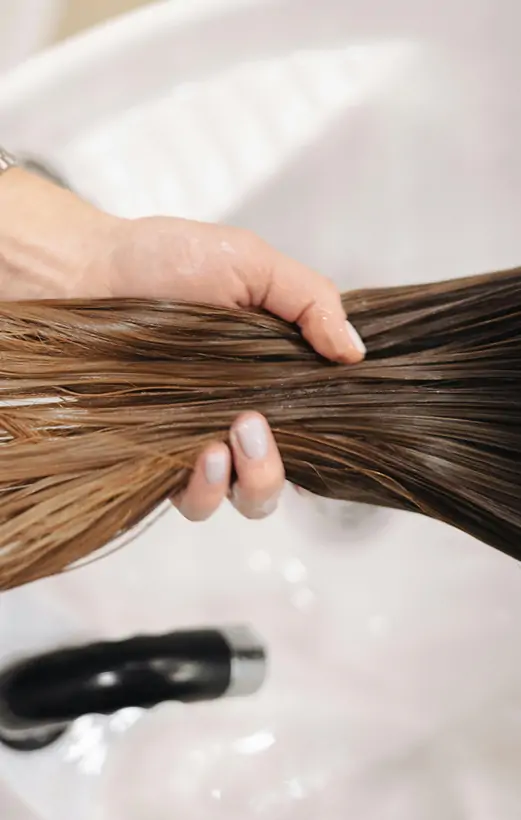
| Hair conditioner / leave-in | 1% – 5% | 0.5% – 2% | Panthenol penetrates hair shaft; glycerin adds surface slip |
| Baby care / gentle formulations | 2% – 8% | 1% – 3% | Both are among the safest cosmetic ingredients; combination is standard in baby creams |
Both ingredients are water-soluble and should be added to the water phase of emulsions. D-Panthenol can also be incorporated into the oil phase at low levels due to its slight oil solubility, which can be useful in anhydrous formulations. For more on D-Panthenol’s specific applications in hair care systems, see our article on D-Panthenol for Hair: Benefits and Formulation Guide.
6. Using D-Panthenol and Glycerin Together
The two ingredients are fully compatible and commonly used together. There are no known interactions, pH conflicts, or stability issues when combining them in the same formulation.
The rationale for combining them is straightforward: glycerin delivers fast, strong surface hydration; D-Panthenol works more slowly to reinforce the barrier that retains that hydration. Glycerin addresses the immediate symptom of dryness; D-Panthenol addresses a structural cause. Together, they cover both short-term and longer-term moisturization.
Formulation tip: Add both to the water phase. Dissolve glycerin first (it is fully miscible and requires no special handling), then add D-Panthenol. If using D-Panthenol at concentrations above 3%, warm the water phase slightly (40–50°C) to ensure complete dissolution. Target finished product pH of 5.0–7.0 for optimal stability of both ingredients.
A common combination ratio in moisturizing serums is 5–8% glycerin with 1–2% D-Panthenol. In barrier repair formulations, the ratio shifts: 3–5% glycerin with 3–5% D-Panthenol, where panthenol takes the lead active role.
7. Which One Should You Prioritize?
The decision depends on the formulation’s primary claim and target consumer:
- If the product claim is immediate hydration, plumping, or moisture boost — glycerin should be the primary humectant, at 5–15% depending on the format
- If the claim is barrier repair, sensitive skin, or post-procedure recovery — D-Panthenol should lead, with glycerin as a supporting humectant at lower levels
- If the product targets dry or compromised skin — use both at meaningful concentrations; the combination outperforms either alone
- If cost is the primary constraint — glycerin is significantly cheaper per effective dose; D-Panthenol can be used at lower levels (0.5–1%) to add functional differentiation without major cost impact
- If sensory elegance is critical (lightweight serums, gel textures) — keep glycerin below 8% and use D-Panthenol as the primary conditioning agent
For a detailed comparison of D-Panthenol against another common humectant, see our article on D-Panthenol vs Hyaluronic Acid, which covers the same decision framework for HA-based systems.
Frequently Asked Questions
Is D-Panthenol better than Glycerin for moisturizing?
Neither is universally better — they work differently. Glycerin is a stronger and faster humectant at equivalent concentrations. D-Panthenol provides additional barrier repair and wound healing benefits that glycerin does not. For pure hydration, glycerin wins on speed and intensity. For barrier-compromised or sensitive skin, D-Panthenol’s functional range makes it the more complete ingredient.
Can D-Panthenol and Glycerin be used together?
Yes. They are fully compatible with no known interactions. Combining them is standard practice in moisturizers and repair creams. Glycerin handles immediate surface hydration; D-Panthenol supports the barrier that retains it. A typical combination in a moisturizing serum is 5–8% glycerin with 1–2% D-Panthenol.
Why does glycerin feel sticky on skin?
Glycerin’s hygroscopic nature means it continues to attract moisture from the environment and sits on the skin surface. Above approximately 15–20% in a leave-on formulation, this creates a perceptible tacky feel. The solution is to keep glycerin below this threshold in leave-on products, or to pair it with emollients and occlusives that create a smoother surface film. D-Panthenol does not have this issue at any typical use level.
Is D-Panthenol safe for sensitive and baby skin?
Yes. D-Panthenol is one of the most widely used ingredients in baby care and sensitive skin formulations precisely because of its low irritation potential and documented soothing properties. It is the active ingredient in Bepanthen/Bepanthol wound care products, which are routinely used on infant skin. Glycerin is equally safe and well-tolerated.
How does glycerin compare to propylene glycol as a humectant?
Both are polyols with similar humectant function, but glycerin is stickier at equivalent concentrations and has a slightly better safety profile perception among consumers. Propylene glycol is less viscous, less sticky, and often used as a co-solvent alongside its humectant function. Many formulations use both. For a detailed comparison, see our article on Propylene Glycol vs Glycerin.
Conclusion
Glycerin and D-Panthenol are complementary rather than competing ingredients. Glycerin is the workhorse humectant — cost-effective, fast-acting, and backed by extensive clinical data. D-Panthenol brings a second layer of function: barrier lipid support, wound healing acceleration, and anti-inflammatory activity that glycerin cannot provide. In most moisturizing formulations, using both makes more sense than choosing one.
Niran Chemical supplies cosmetic-grade D-Panthenol (D-form and DL-form) with COA, MSDS, and TDS available on request for B2B buyers.