

Isopropyl myristate (IPM) is one of the most widely used esters in cosmetic formulation — not because it is exotic or expensive, but because it solves several common formulation problems at once. It reduces greasiness, improves spreadability, enhances the delivery of active ingredients, and does all of this without adding significant cost or complexity to a formula. For procurement teams and formulators evaluating IPM for skin care applications, this article covers what it does, where it fits, and what to watch for.
Short answer: Isopropyl myristate is a synthetic ester of isopropyl alcohol and myristic acid. In skin care, it functions as a lightweight emollient, penetration enhancer, texture modifier, and solvent for lipophilic actives. It is well-established, cost-effective, and compatible with most cosmetic systems — with one formulation consideration worth understanding: its comedogenic rating.
What Is Isopropyl Myristate?
IPM is produced by esterification of myristic acid (a 14-carbon saturated fatty acid derived from coconut or palm kernel oil) with isopropyl alcohol. The resulting ester is a clear, low-viscosity, virtually odorless liquid that is lipophilic but not water-soluble. Its low molecular weight and branched isopropyl group give it excellent fluidity and spreadability — properties that distinguish it from heavier, longer-chain esters.
- INCI name: Isopropyl Myristate
- CAS number: 110-27-0
- Chemical formula: C₁₇H₃₄O₂
- Molecular weight: 270.45 g/mol
- Appearance: Clear, colorless to pale yellow liquid
- Boiling point: 192–193°C
- Melting point: ~3°C (liquid at room temperature)
- Solubility: Insoluble in water; soluble in ethanol, oils, and most cosmetic esters
- Regulatory status: CIR-approved for cosmetic use; EU Cosmetics Regulation compliant
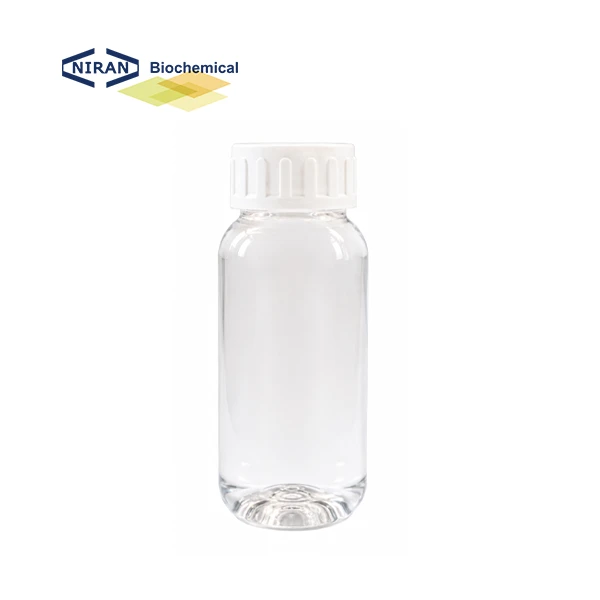
IPM has been used in cosmetics since the 1940s, making it one of the most well-established synthetic esters in the industry. Niran Chemical supplies cosmetic-grade Isopropyl Myristate with COA, MSDS, and TDS available for B2B buyers.
Functions in Skin Care
| Function | Mechanism | Practical Effect |
|---|---|---|
| Emollient | Forms a thin, non-occlusive film on the skin surface that reduces TEWL | Skin feels soft and smooth without greasiness or occlusion |
| Penetration enhancer | Integrates into the lipid bilayer of the stratum corneum, increasing membrane fluidity and creating transient pathways | Improves delivery of lipophilic actives (vitamins, UV filters, pharmaceutical APIs) into the epidermis |
| Texture modifier | Low viscosity and high spreadability reduce the perceived heaviness of oils and waxes in a formula | Lightens heavy formulations; improves slip and spreadability |
| Solvent | Dissolves lipophilic ingredients that are difficult to incorporate into aqueous or emulsion systems | Solubilizes UV filters, fragrance components, oil-soluble vitamins, and lanolin |
| Viscosity modifier | Reduces viscosity of thick oil phases | Improves processability and pourability of oil-heavy formulations |
The penetration enhancement mechanism is worth understanding in more detail. The stratum corneum’s barrier function depends on tightly packed lipid lamellae between corneocytes. IPM integrates into these lipid structures, disrupting their ordered packing and temporarily increasing membrane fluidity. This creates pathways that allow other molecules — particularly lipophilic actives — to move more efficiently into the epidermis. This is why IPM appears in both cosmetic formulations and topical pharmaceutical products where transdermal delivery of active ingredients is a design goal.
Applications by Product Type
| Product Type | Role of IPM | Key Benefit |
|---|---|---|
| Facial moisturizers and serums | Emollient, penetration enhancer | Lightweight feel; improves delivery of actives like retinol, vitamin C esters, niacinamide |
| Sunscreens | Solvent for UV filters, texture modifier | Solubilizes lipophilic UV filters (e.g., octinoxate, avobenzone); reduces oiliness in sun milks and sprays |
| Foundations and BB creams | Texture modifier, binder | Improves pigment dispersion, enhances spreadability, contributes to a silky finish |
| Cleansing balms and oils | Solvent, emollient | Dissolves sebum and makeup; rinses cleanly without residue |
| Body lotions and creams | Emollient, grease reducer | Reduces heavy or greasy feel in formulations with high oil content |
| Anti-cellulite and body treatments | Penetration enhancer | Enhances transdermal delivery of actives such as caffeine |
| Spray formulations | Viscosity reducer | Low viscosity enables fine atomization in spray lotions and mists |
| Topical pharmaceutical products | Penetration enhancer, solvent | Improves bioavailability of APIs in transdermal and topical drug delivery systems |
For formulators choosing between IPM and its closest alternative, our article on Isopropyl Myristate vs Isopropyl Palmitate covers the functional differences in detail. IPM is lighter and faster-absorbing; IPP (isopropyl palmitate) has a slightly richer feel and lower comedogenic rating, making it preferred for sensitive or acne-prone skin formulations.
For guidance on selecting the right concentration for specific product types, see our article on choosing the right IPM concentration.
Safety and the Comedogenic Question
IPM is classified as safe for cosmetic use by the Cosmetic Ingredient Review (CIR) Expert Panel and is compliant with EU Cosmetics Regulation No. 1223/2009. It has a low irritation and sensitization potential, is resistant to oxidation, and does not become rancid under normal storage conditions.
The one formulation consideration that comes up consistently is comedogenicity. IPM carries a comedogenic rating of 5/5 on the standard rabbit ear assay scale — the highest possible score. This rating has led to its exclusion from some “non-comedogenic” product lines and has generated consumer concern.
The practical picture is more nuanced. The rabbit ear assay, which generated this rating, is not considered a reliable predictor of comedogenicity in human skin. Human clinical studies on IPM have not consistently demonstrated pore-clogging effects at typical cosmetic concentrations (2–10%). The comedogenic concern is most relevant for leave-on facial products used by individuals with oily or acne-prone skin, particularly at higher concentrations. For rinse-off products, body care, and most leave-on formulations at standard concentrations, the comedogenic rating is generally not a practical concern.
For brands positioning products as non-comedogenic or targeting acne-prone skin, isopropyl palmitate (IPP) or C12-15 alkyl benzoate are the standard alternatives. Niran Chemical supplies Isopropyl Myristate in cosmetic grade with full quality documentation.
How to Choose: IPM or an Alternative?
- General skin care (moisturizers, serums, body care): IPM is the standard choice. Its lightweight feel, penetration-enhancing properties, and cost-effectiveness make it the default emollient ester for most formulations.
- Sunscreens: IPM is widely used to solubilize lipophilic UV filters and reduce oiliness. Well-suited for sun milks, sprays, and after-sun products.
- Acne-prone or oily skin leave-on products: Consider isopropyl palmitate (IPP) or C12-15 alkyl benzoate as alternatives with lower comedogenic ratings. IPM can still be used at lower concentrations with careful formulation.
- Pharmaceutical topical formulations: IPM is a recognized penetration enhancer in topical drug delivery. Pharmaceutical-grade IPM with tighter purity specifications may be required depending on the regulatory pathway.
- Cleansing products: IPM works well in cleansing balms and oils for its solvent properties and clean rinse-off behavior.
- Cost-sensitive formulations: IPM is one of the most affordable cosmetic esters, typically $2–6/kg in bulk. It offers a strong cost-performance ratio compared to specialty esters.
Frequently Asked Questions
What does isopropyl myristate do in skin care products?
IPM functions as an emollient, penetration enhancer, texture modifier, and solvent in skin care. It makes formulations feel lighter and less greasy, improves the spreadability of creams and lotions, and enhances the delivery of lipophilic active ingredients into the skin. It is used across moisturizers, sunscreens, foundations, cleansing products, and body care.
Is isopropyl myristate safe for skin?
Yes. IPM is classified as safe for cosmetic use by the CIR Expert Panel and is compliant with EU cosmetics regulations. It has a low irritation and sensitization potential. The main formulation consideration is its comedogenic rating (5/5 on the rabbit ear assay), which is most relevant for leave-on facial products targeting oily or acne-prone skin. At typical cosmetic concentrations in most product types, it is well-tolerated.
Does isopropyl myristate clog pores?
The comedogenic rating of 5/5 comes from the rabbit ear assay, which is not considered a reliable predictor of pore-clogging in human skin. Human clinical data on IPM does not consistently show comedogenic effects at standard cosmetic concentrations. The concern is most relevant for high-concentration leave-on facial products used by individuals with oily or acne-prone skin. For these applications, isopropyl palmitate or C12-15 alkyl benzoate are lower-comedogenic alternatives.
What is the difference between isopropyl myristate and isopropyl palmitate?
Both are isopropyl esters used as emollients and texture modifiers. IPM (C14 fatty acid chain) is lighter, faster-absorbing, and a stronger penetration enhancer. IPP (C16 fatty acid chain) has a slightly richer feel, a lower comedogenic rating, and is preferred for sensitive or acne-prone skin formulations. IPM is more widely used and typically more cost-effective.
What products commonly contain isopropyl myristate?
IPM appears in moisturizers, serums, sunscreens, foundations, BB creams, cleansing balms, body lotions, spray formulations, and topical pharmaceutical products. It is one of the most widely used cosmetic esters globally, valued for its versatility and cost-effectiveness.
How is isopropyl myristate sourced and what grades are available?
IPM is produced by esterification of myristic acid (derived from coconut or palm kernel oil) with isopropyl alcohol. Cosmetic grade is the standard for personal care applications. Pharmaceutical grade, with tighter purity specifications and lower impurity limits, is available for topical drug delivery applications. When sourcing, key specifications to verify include ester content, acid value, color (APHA), and refractive index.
Conclusion
Isopropyl myristate is a well-established, cost-effective ester that addresses multiple formulation challenges simultaneously — lightweight emolliency, penetration enhancement, texture improvement, and solubilization of lipophilic actives. Its comedogenic rating warrants consideration for leave-on facial products targeting acne-prone skin, but for the broad range of skin care applications, IPM remains one of the most practical and versatile esters available to formulators.