
Walk through any cosmetic ingredient catalogue and you will find both D-Panthenol and Hyaluronic Acid listed under “humectants.” That shared label creates a common misconception: that the two are interchangeable, or that choosing one means skipping the other. In practice, they operate through entirely different mechanisms, target different layers of the skin, and solve different formulation problems.
This article breaks down the chemistry, functional differences, and practical formulation guidance for both ingredients — written from a raw material supplier’s perspective, for formulators and product developers who need clarity rather than marketing copy.
Quick answer: D-Panthenol (Provitamin B5) penetrates the skin, converts to pantothenic acid, and actively supports barrier repair and cell regeneration. Hyaluronic Acid works primarily at the surface and upper dermis, drawing and holding water through its exceptional hygroscopic capacity. They complement each other — most high-performance moisturizing systems use both.
1. What They Are: Chemistry at a Glance
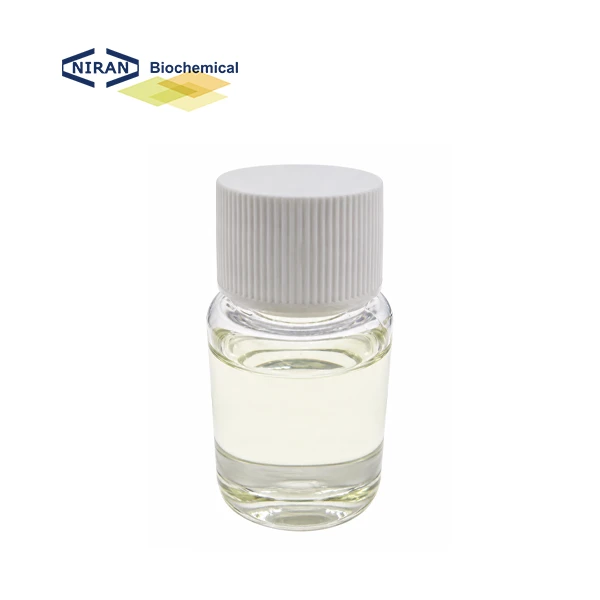
D-Panthenol (Provitamin B5)
D-Panthenol is the alcohol analogue of pantothenic acid (Vitamin B5). Its molecular weight sits around 205 Da — small enough to penetrate the stratum corneum and reach the viable epidermis. Once absorbed, skin enzymes oxidize it to pantothenic acid, which participates in coenzyme A synthesis, a pathway central to fatty acid metabolism and cell membrane integrity.
It is water-soluble, stable across a broad pH range (4.0–8.0), and compatible with most cosmetic systems. The “D” isomer is the biologically active form. DL-Panthenol (a racemic mixture) is also commercially available at lower cost, though only the D-form delivers full biological activity.
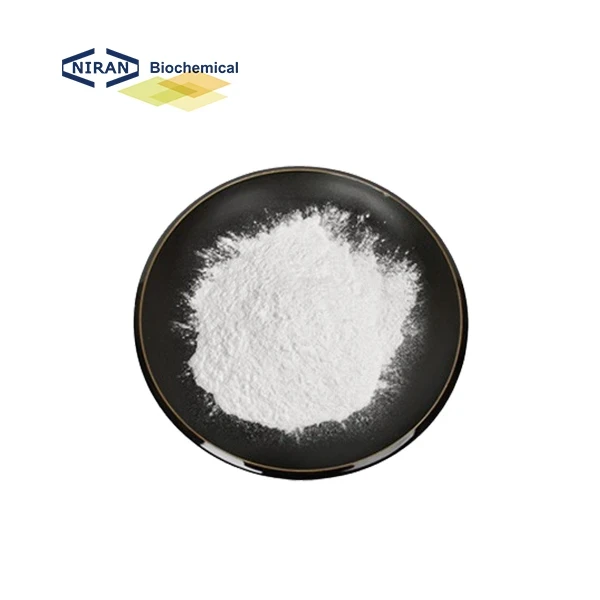
Hyaluronic Acid (HA)
Hyaluronic Acid is a naturally occurring glycosaminoglycan — a long-chain polysaccharide composed of repeating disaccharide units of glucuronic acid and N-acetylglucosamine. Its molecular weight ranges from as low as 5 kDa (oligomeric HA) to over 2,000 kDa (high-molecular-weight HA), and this range determines how deeply it penetrates and what it does.
HA can bind up to 1,000 times its weight in water. In cosmetic applications it is most commonly used as sodium hyaluronate — the sodium salt form, which is more stable and slightly more water-soluble than free HA.
2. How Each Ingredient Works in Skin
D-Panthenol: Active Penetration and Barrier Repair
Because of its low molecular weight, D-Panthenol moves through the stratum corneum relatively efficiently. Its primary actions in skin are:
- Humectancy: attracts and retains water within the skin layers it reaches
- Barrier reinforcement: supports lipid synthesis in keratinocytes, strengthening the intercellular lipid matrix
- Wound healing acceleration: stimulates fibroblast proliferation and epithelial migration — well-documented in clinical literature
- Anti-inflammatory effect: reduces redness and irritation, making it suitable for post-procedure and sensitive skin formulations
The barrier repair function is what sets D-Panthenol apart from most other humectants. It does not just add water — it helps the skin hold onto water more effectively over time by improving the structural integrity of the barrier itself.
Hyaluronic Acid: Surface Hydration and Plumping
HA’s mechanism is primarily physical rather than biochemical. Its enormous water-binding capacity creates an immediate hydration reservoir at and just below the skin surface. The depth of action depends on molecular weight:
- High-MW HA (>1,000 kDa): forms a film on the skin surface, reduces TEWL, provides immediate plumping
- Medium-MW HA (100–1,000 kDa): penetrates into the upper stratum corneum, delivers sustained hydration
- Low-MW HA (<100 kDa): reaches deeper epidermal layers, may stimulate HA synthesis in fibroblasts
- Oligomeric HA (<10 kDa): deepest penetration, anti-inflammatory signalling properties
One important caveat: in low-humidity environments, high-MW HA can draw moisture from the deeper skin layers toward the surface, potentially increasing transepidermal water loss (TEWL) if not sealed with an occlusive or emollient. This is a formulation consideration that is often overlooked in consumer-facing content.
3. Side-by-Side Comparison
| Parameter | D-Panthenol | Hyaluronic Acid (Sodium Hyaluronate) |
|---|---|---|
| Chemical nature | Alcohol analogue of Vitamin B5 | Glycosaminoglycan polysaccharide |
| Molecular weight | ~205 Da (fixed) | 5 kDa – 2,000+ kDa (variable by grade) |
| Primary action | Barrier repair + humectancy | Water binding + surface hydration |
| Skin penetration depth | Epidermis (viable layers) | Depends on MW: surface to upper dermis |
| Mechanism | Biochemical (converts to pantothenic acid) | Physical (hygroscopic water retention) |
| Barrier repair | Yes — supports lipid synthesis | Indirect (film-forming, reduces TEWL) |
| Anti-inflammatory | Yes — clinically documented | Mild (low-MW HA only) |
| Wound healing | Yes — stimulates fibroblast proliferation | Supportive role only |
| Typical use level | 0.5% – 5% | 0.01% – 2% (varies by MW grade) |
| Solubility | Water-soluble (slightly oil-soluble) | Water-soluble only |
| pH stability | 4.0 – 8.0 | 5.0 – 8.0 (degrades below pH 4) |
| Compatibility | Broad — works in most systems | Avoid high salt concentrations; check viscosity |
| Best suited for | Sensitive, damaged, post-procedure skin | Dehydrated, mature, all skin types |
| INCI name | Panthenol | Sodium Hyaluronate / Hyaluronic Acid |
4. Formulation Guidance by Product Type
Knowing the functional differences is one thing — knowing how to apply them in actual formulations is another. The table below covers typical use levels across common product categories.
| Product Type | D-Panthenol (%) | Sodium Hyaluronate (%) | Notes |
|---|---|---|---|
| Hydrating serum | 1% – 3% | 0.1% – 1% (multi-MW blend) | Combine both; add occlusive in dry climates |
| Moisturizing cream / lotion | 0.5% – 2% | 0.05% – 0.5% | HA in water phase; panthenol can go in either phase |
| Sensitive / barrier repair cream | 2% – 5% | 0.1% – 0.3% (low-MW preferred) | Panthenol is the primary active; HA supports surface comfort |
| Post-procedure / wound care | 3% – 5% | 0.1% – 0.5% | High panthenol for healing; HA for moisture retention |
| Shampoo / hair conditioner | 0.2% – 2% | 0.01% – 0.1% | Panthenol penetrates hair shaft; HA adds surface slip |
| Toner / essence | 0.5% – 1% | 0.1% – 0.5% | Both water-soluble; easy to combine in single phase |
| Eye cream | 0.5% – 1% | 0.05% – 0.2% | Keep concentrations moderate; avoid high-MW HA near eye area |
For formulators working with propylene glycol or other polyols as co-humectants, both D-Panthenol and HA are compatible and can be combined in the same water phase without compatibility issues. Niran Chemical supplies both cosmetic-grade D-Panthenol and Sodium Hyaluronate in multiple molecular weight grades for B2B buyers.
5. Using D-Panthenol and Hyaluronic Acid Together
There are no known incompatibilities between D-Panthenol and Hyaluronic Acid — they combine freely in the same water phase. The logic is simple: HA draws water to the surface; D-Panthenol reinforces the barrier that keeps it from escaping. One fills the reservoir, the other seals it.
Formulation tip: Add HA to the water phase first and allow 30–60 minutes to fully hydrate before adding D-Panthenol. Target pH 5.5–6.5 for optimal stability of both. In multi-MW HA systems, add grades from highest to lowest molecular weight sequentially.
The combination is especially effective in three scenarios:
- Dry or compromised skin: HA gives immediate surface relief; panthenol addresses the underlying barrier dysfunction
- Post-procedure formulations: HA soothes and hydrates the surface; panthenol accelerates tissue repair
- Arid-climate products: panthenol’s barrier-strengthening effect offsets HA’s tendency to draw moisture outward in low-humidity conditions
6. Which One Should You Prioritize?
The answer depends on what problem you are solving in your formulation:
- If the primary goal is immediate, visible hydration and plumping — prioritize HA, especially a multi-MW blend
- If the goal is barrier repair, sensitivity reduction, or post-procedure recovery — D-Panthenol should be the lead active
- If you are formulating a general-purpose moisturizer — use both; the combination covers a broader range of consumer needs at cost-effective use levels
- If cost is a constraint — D-Panthenol is generally more affordable per effective dose than high-quality multi-MW HA systems
D-Panthenol has a longer track record in regulated applications — wound care, pharmaceutical topicals, baby care — making it a strong claim anchor for clinical or sensitive-skin positioning. HA carries stronger consumer recognition in the premium skincare segment. For hair care applications, our article on D-Panthenol for Hair covers formulation guidance specific to rinse-off and leave-on systems.
Frequently Asked Questions
Is D-Panthenol the same as Hyaluronic Acid?
No. They are chemically unrelated. D-Panthenol is a small-molecule alcohol derived from Vitamin B5, while Hyaluronic Acid is a large polysaccharide. They share the humectant function but work through different mechanisms and at different skin depths.
Can D-Panthenol and Hyaluronic Acid be used in the same formula?
Yes, and this is actually recommended. There are no known incompatibilities. Both are water-soluble and can be added to the water phase of an emulsion or used together in a serum. The combination provides complementary hydration — HA at the surface, panthenol deeper in the epidermis.
What is the difference between D-Panthenol and DL-Panthenol?
D-Panthenol is the pure, biologically active isomer. DL-Panthenol is a racemic mixture of D- and L-forms. Only the D-form converts to pantothenic acid in the skin, so DL-Panthenol delivers roughly half the biological activity at the same concentration. D-Panthenol is preferred for functional claims; DL-Panthenol is used where cost is the primary driver.
What concentration of D-Panthenol is effective for barrier repair?
Clinical studies on wound healing and barrier repair typically use concentrations of 1%–5%. For general moisturizing products, 0.5%–2% is standard. Higher concentrations (3%–5%) are used in post-procedure, eczema-prone, or intensive repair formulations.
Does Hyaluronic Acid dry out skin in low humidity?
High-molecular-weight HA can draw moisture from deeper skin layers toward the surface in very dry environments, potentially increasing TEWL if not sealed with an occlusive or emollient. This is why formulations for dry climates often pair HA with occlusives such as squalane, or barrier-supporting ingredients like D-Panthenol.
Which is better for sensitive skin — D-Panthenol or Hyaluronic Acid?
Both are well-tolerated by sensitive skin. D-Panthenol has a slight edge due to its documented anti-inflammatory and barrier-repair properties, which address the root cause of sensitivity. HA is also gentle but primarily addresses hydration rather than barrier dysfunction. For sensitive skin formulations, combining both is the most comprehensive approach.
What are the storage requirements for each ingredient?
D-Panthenol is stable for 24–36 months when stored in a cool, dry place away from direct light. Sodium hyaluronate typically has a shelf life of 24 months under similar conditions. In finished formulations, keep pH above 4.5 to prevent hydrolytic degradation of HA.
Conclusion
D-Panthenol and Hyaluronic Acid are not competitors — they are partners. HA excels at drawing and holding water at the skin surface, delivering the immediate hydration and plumping effect that consumers notice. D-Panthenol works at a deeper level, converting to an active vitamin form that supports barrier integrity, reduces inflammation, and accelerates tissue repair.
For formulators, the practical takeaway is simple: use both when budget allows. The combination covers a broader functional spectrum than either ingredient alone, and both are cost-effective at their typical use levels. When budget requires a choice, let the product’s primary claim guide the decision — hydration and plumping points to HA; barrier repair and sensitivity reduction points to D-Panthenol.
Niran Chemical supplies cosmetic-grade D-Panthenol (D-form and DL-form) and Sodium Hyaluronate across multiple molecular weight grades, with COA, MSDS, and TDS available on request.