
Xanthan gum is one of the most widely used rheology modifiers in personal care — not because it is trendy, but because it works reliably across a broad range of formulation types, pH levels, and temperatures. It thickens, stabilizes emulsions, suspends particles, and does all of this at concentrations typically below 1%. For formulators and procurement teams evaluating xanthan gum for skin care, face masks, or hair care applications, this article covers the functional properties, application-specific guidance, and how it compares to alternative thickeners.
Short answer: Xanthan gum is a natural polysaccharide produced by fermentation of Xanthomonas campestris. In personal care, it functions as a thickener, emulsion stabilizer, and suspending agent. Its pseudoplastic (shear-thinning) behavior makes it particularly well-suited for pump-dispensed serums, face masks, and rinse-off hair care products. It is COSMOS-approved, non-comedogenic, and compatible with most cosmetic systems.
What Is Xanthan Gum?
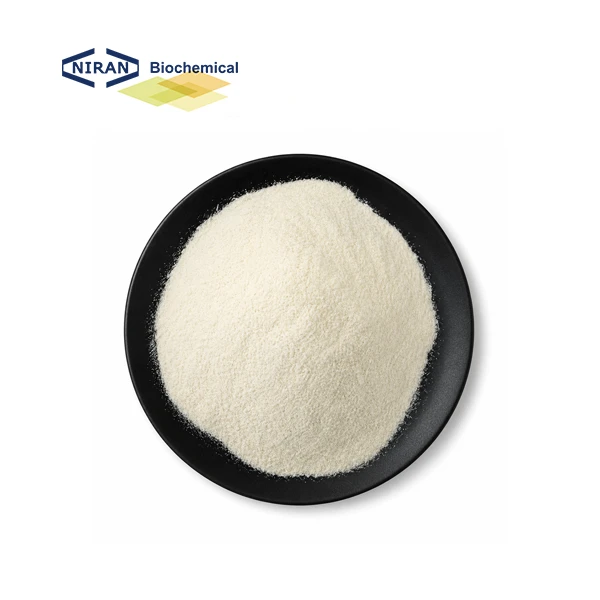
Xanthan gum is a high-molecular-weight polysaccharide produced through aerobic fermentation of glucose or sucrose by the bacterium Xanthomonas campestris. The fermentation broth is pasteurized, precipitated with isopropanol, dried, and milled into a fine off-white powder. The resulting polymer consists of a cellulose backbone with trisaccharide side chains — a structure that gives it exceptional water-binding capacity and unique rheological properties.
- INCI name: Xanthan Gum
- CAS number: 11138-66-2
- E number: E415 (food grade)
- Appearance: Off-white to cream powder
- Solubility: Water-soluble; disperses in both cold and hot water
- pH stability: 3.0–12.0 (stable across a very wide range)
- Typical use level in personal care: 0.1%–1.0%
- Comedogenic rating: 0/5
- Certification: COSMOS-approved; suitable for natural and organic formulations
Niran Chemical supplies cosmetic-grade Xanthan Gum with COA, MSDS, and TDS available for B2B buyers.
Key Functional Properties
| Property | Description | Formulation Benefit |
|---|---|---|
| Pseudoplasticity (shear-thinning) | Viscosity decreases under shear (pumping, spreading) and recovers immediately when force is removed | Easy to pump and spread; product stays in place after application — ideal for serums, masks, and lotions |
| Thickening at low concentration | Effective at 0.1%–0.5%; forms a three-dimensional network in water | Cost-efficient; minimal impact on formula aesthetics at low levels |
| Emulsion stabilization | Increases continuous phase viscosity, reducing droplet coalescence and creaming | Extends shelf life of O/W and W/O emulsions without additional emulsifiers |
| Particle suspension | Three-dimensional network holds insoluble particles (pigments, UV filters, exfoliants) in suspension | Prevents settling in physical sunscreens, scrubs, and pigmented products |
| Temperature stability | Viscosity remains consistent from 0°C to 80°C | Suitable for products used in varying climates; stable during hot-fill manufacturing |
| pH stability | Functional across pH 3.0–12.0 | Compatible with acidic actives (AHAs, vitamin C), alkaline systems, and everything in between |
| Electrolyte tolerance | Maintains viscosity in the presence of salts | Compatible with salt-thickened surfactant systems and mineral-rich formulations |
The pseudoplastic behavior is xanthan gum’s most commercially valuable property in personal care. Unlike Newtonian fluids that maintain constant viscosity regardless of shear, xanthan gum solutions thin dramatically when pumped or rubbed, then recover their structure instantly. This is why it is the thickener of choice for pump-dispensed serums and sheet mask liquids — it flows easily through dispensing mechanisms but does not drip or run once applied to skin.
Applications in Personal Care
Skin Care: Serums, Moisturizers, and Gels
In lightweight serums and water-based moisturizers, xanthan gum provides body and slip without the heaviness of higher-concentration thickeners. At 0.1%–0.3%, it creates a smooth, gel-like texture that spreads easily and absorbs without residue. It works synergistically with humectants — glycerin, sodium hyaluronate, and panthenol — to reduce any potential tackiness and improve the overall skin feel. Its film-forming properties contribute a mild skin-conditioning effect, helping to reduce transepidermal water loss without occlusion.
Face Masks: Rinse-Off and Sheet Masks
Face masks represent one of xanthan gum’s strongest application areas. For rinse-off masks (gel, clay, or emulsion format), xanthan gum provides the viscosity needed for the product to stay on the face without dripping, while its shear-thinning behavior allows easy application and removal. For sheet mask liquids, it thickens the serum phase to improve contact time with the skin and prevent rapid evaporation — the same mechanism that makes sheet masks effective as “incubators” for active ingredients.
In clay masks, xanthan gum helps suspend clay particles evenly throughout the formula, preventing separation during storage. In peel-off masks, it contributes to the flexible film structure alongside film-forming polymers.

Hair Care: Shampoos, Conditioners, and Treatments
In shampoo formulations, xanthan gum thickens the surfactant system and improves the suspension of conditioning agents and active ingredients. Unlike salt thickening (which is the most common approach in anionic surfactant systems), xanthan gum maintains viscosity across a wider pH range and is compatible with amphoteric and non-ionic surfactant systems where salt thickening is less effective. For more on surfactant system design in hair care, see our article on SLES vs SLS vs ALS.
In conditioners and hair masks, xanthan gum stabilizes the emulsion and improves the distribution of conditioning actives. In leave-in treatments and styling gels, its pseudoplastic behavior provides hold that releases under the heat and friction of styling without leaving a stiff or crunchy residue.
Sunscreens and Physical UV Products
Physical sunscreens containing zinc oxide or titanium dioxide present a significant formulation challenge: keeping insoluble UV filter particles evenly suspended throughout the product’s shelf life. Xanthan gum’s three-dimensional network structure is particularly effective for this application, holding particles in suspension without requiring high concentrations. It also improves the spreadability of sunscreen formulas, which tend to be heavy due to the high mineral content.
Niran Chemical’s Xanthan Gum is available in grades suitable for both rinse-off and leave-on personal care applications.
Xanthan Gum vs Other Thickeners
| Thickener | Origin | pH Range | Shear-Thinning | Electrolyte Tolerance | COSMOS Approved | Best For |
|---|---|---|---|---|---|---|
| Xanthan Gum | Microbial fermentation | 3.0–12.0 | Excellent | Good | Yes | Serums, masks, hair care, sunscreens |
| Carbomer (Carbopol) | Synthetic polymer | 5.0–9.0 | Good | Poor (salt-sensitive) | No | Clear gels, lotions, pharmaceutical topicals |
| Hydroxyethyl Cellulose (HEC) | Semi-synthetic (cellulose) | 2.0–12.0 | Moderate | Good | No | Shampoos, body washes, clear gels |
| Guar Gum | Plant (guar bean) | 4.0–10.5 | Moderate | Moderate | Yes | Hair conditioners, masks |
| Sclerotium Gum | Microbial fermentation | 4.0–8.0 | Good | Good | Yes | Premium serums, luxury textures |
Xanthan gum’s combination of wide pH stability, COSMOS approval, and strong shear-thinning behavior makes it the most versatile natural thickener for personal care. Carbomer produces clearer gels and is preferred in pharmaceutical topicals, but its sensitivity to electrolytes limits its use in salt-containing systems. Guar gum is a natural alternative with good conditioning properties for hair care but less effective suspension capability. For formulators building clean beauty or COSMOS-certified product lines, xanthan gum is typically the first-choice thickener.
Safety and Regulatory Status
Xanthan gum has an extensive safety record across food, pharmaceutical, and cosmetic applications. The Cosmetic Ingredient Review (CIR) Expert Panel has evaluated xanthan gum and concluded it is safe for use in cosmetics at concentrations typically ranging from 0.01% to 2%. It is a large molecule that cannot penetrate the skin barrier, which means no systemic absorption and no systemic toxicity risk from topical use.
Key regulatory and certification status:
- COSMOS-approved: Suitable for natural and organic certified formulations (ECOCERT, COSMOS, NATRUE)
- CIR-assessed: Safe for cosmetic use at standard concentrations
- EU Cosmetics Regulation: Compliant; no restrictions
- FDA: GRAS status for food use (E415); no restrictions for cosmetic use
- Comedogenic rating: 0/5 — does not clog pores
- Vegan and cruelty-free: Produced by microbial fermentation, no animal-derived inputs
The main formulation consideration is pilling: at concentrations above 0.5–0.8% in leave-on products, xanthan gum can cause the formula to ball up on the skin during application, particularly when layered over other products. This is managed by keeping concentrations within the recommended range and pairing with humectants such as glycerin or sodium hyaluronate to improve skin feel.
How to Choose: Xanthan Gum or an Alternative?
- Natural or COSMOS-certified formulations: Xanthan gum is the default choice. It is COSMOS-approved, biodegradable, and produced by fermentation — aligning with clean beauty and sustainability positioning.
- Clear gel formulations: Xanthan gum produces slightly hazy gels. For crystal-clear gels, hydroxyethyl cellulose or carbomer (in non-electrolyte systems) may be preferred.
- Face masks and sheet mask liquids: Xanthan gum is the industry standard. Its shear-thinning behavior and particle suspension capability are well-matched to this application.
- Shampoos with salt thickening: Xanthan gum can supplement or replace salt thickening, particularly in sulfate-free or amphoteric surfactant systems where salt is less effective.
- Physical sunscreens: Xanthan gum is preferred for its particle suspension capability. Carbomer is less suitable due to electrolyte sensitivity.
- Premium or luxury textures: Sclerotium gum or blends (xanthan + tara gum, xanthan + acacia gum) produce a silkier, less tacky feel than xanthan alone and are used in premium formulations where sensory elegance is a priority.
Frequently Asked Questions
What does xanthan gum do in skin care products?
Xanthan gum functions as a thickener, emulsion stabilizer, and suspending agent. It gives serums and lotions their gel-like texture, prevents oil and water phases from separating, and keeps insoluble particles (pigments, UV filters, exfoliants) evenly distributed. Its shear-thinning behavior allows products to flow easily during application and recover their structure immediately after.
Is xanthan gum natural?
Yes. Xanthan gum is produced by microbial fermentation of sugars by Xanthomonas campestris — a natural, biotechnology-based process. It is COSMOS-approved and suitable for natural and organic certified formulations. It is also vegan, as no animal-derived inputs are used in its production.
What concentration of xanthan gum should be used in personal care?
Typical use levels are 0.1%–0.5% for most leave-on products (serums, moisturizers, face masks) and up to 1.0% for rinse-off products or formulations requiring higher viscosity. Above 0.5–0.8% in leave-on products, pilling can become a concern. Pre-dispersing xanthan gum in glycerin or oil before adding to the water phase helps prevent clumping during incorporation.
How does xanthan gum compare to carbomer as a thickener?
Carbomer produces clearer gels and is widely used in pharmaceutical topicals and clear cosmetic gels. However, it is sensitive to electrolytes (salts reduce its thickening efficiency), requires neutralization to activate, and is not COSMOS-approved. Xanthan gum is more versatile across pH and electrolyte conditions, is naturally derived, and does not require neutralization — making it the preferred choice for natural formulations and salt-containing systems.
Conclusion
Xanthan gum is a technically reliable, naturally derived thickener that performs consistently across a wide range of personal care applications — from lightweight serums and sheet mask liquids to shampoos and physical sunscreens. Its pseudoplastic behavior, broad pH stability, COSMOS approval, and particle suspension capability make it one of the most versatile rheology modifiers available to formulators working in both mainstream and clean beauty segments.
Niran Chemical supplies cosmetic-grade Xanthan Gum for personal care applications, with full technical documentation including COA, MSDS, and TDS. Contact us to request samples or discuss your formulation requirements.