
Phosphoric acid and citric acid are two commonly used acids in industrial cleaning and processing. They are often mentioned together because both can be used for descaling, pH adjustment, and cleaning formulations.
However, they behave quite differently in real applications. Phosphoric acid is usually chosen when stronger scale removal, rust treatment, or metal surface preparation is needed. Citric acid is more suitable for situations where lower corrosion risk, biodegradability, or gentler cleaning performance matters. Choosing between them is not simply about acid strength; rather, the right option depends on what needs to be removed, what equipment is being cleaned, and how the overall process is designed.
Quick Comparison: Phosphoric Acid vs Citric Acid
| Property | Phosphoric Acid | Citric Acid |
|---|---|---|
| Chemical Type | Mineral Acid | Organic Acid |
| Relative Acid Strength | Higher | Lower |
| Rust Removal | Strong | Moderate |
| Scale Removal | Strong | Good |
| Metal Treatment | Widely used | Limited |
| Corrosion Risk | Higher | Lower |
| Biodegradability | Moderate | Excellent |
| Wastewater Consideration | Phosphate-related limits may apply | Generally easier to manage |
| Food Equipment Cleaning | Suitable for some systems | Commonly preferred |
| Industrial Cleaning Usage | Broad | More application-specific |
| Common Forms | Liquid | Powder / Granules |
Why Are These Two Acids Compared?
In many industrial formulations, procurement teams and chemical formulators frequently evaluate phosphoric acid and citric acid whenever a product requires a reliable acidic component. However, these two chemicals are designed to solve fundamentally different operational problems.
A heavy-duty cleaner engineered for removing tough rust or stubborn mineral deposits usually focuses strictly on cleaning power and reaction speed. In these demanding scenarios, phosphoric acid holds a clear performance advantage. On the other hand, cleaning systems deployed around highly sensitive machinery must prioritize long-term material compatibility and safe operator handling. Citric acid is more frequently considered in these situations because its milder chemical profile significantly lowers the risk of accidental equipment corrosion. For industrial formulators, the core procurement question is rarely “which acid is stronger?” but rather “which acid fits the precise technical demands of the application?”
Where Phosphoric Acid Performs Better
Metal Surface Treatment
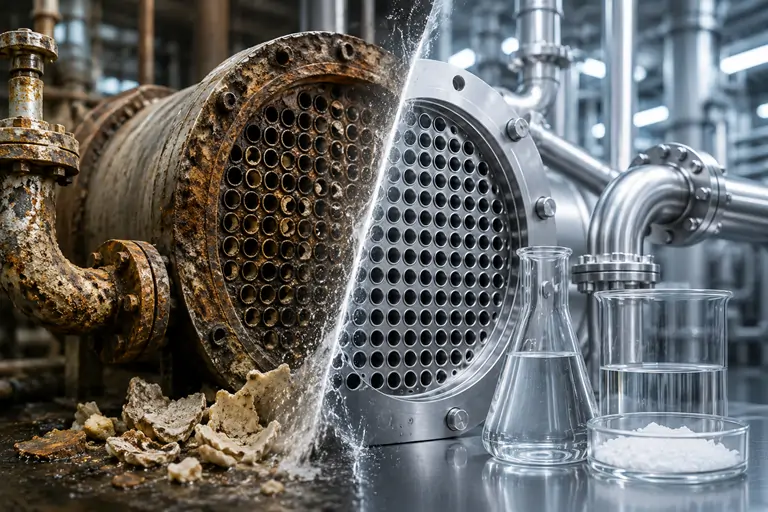
Phosphoric acid has long been an essential benchmark material in metal treatment and finishing applications. It is widely utilized across the industry for critical processes such as heavy rust removal, surface preparation before coating, metal conditioning, and technical phosphating processes.
The primary technical divergence between phosphoric acid and citric acid lies in how they chemically interact with metal substrates. Phosphoric acid does not merely clean; it actively reacts with iron oxides on the surface to help form a dense, passivating phosphate layer. This chemical transformation drastically improves downstream coating adhesion and provides superior surface preparation before painting or final finishing. For the metal processing and automotive industries, this unique passivating property is exceptionally difficult to replace with organic acids.
Heavy-Duty Descaling
Mineral scale buildup represents a persistent operational challenge in industrial equipment, frequently occurring in high-temperature or continuous-flow systems such as boilers, heat exchangers, cooling systems, and process pipelines. When these mineral deposits accumulate over time, they create an insulating barrier that severely reduces heat transfer efficiency and increases unscheduled maintenance frequency.
Phosphoric acid is a preferred active ingredient in industrial descaling formulations because it can dissolve calcium-based and complex mineral deposits with exceptional speed and efficacy. Compared with weaker organic alternatives, industrial plants favor phosphoric acid when minimizing operational downtime through fast-acting cleaning cycles is the priority.
Industrial Cleaning Formulations
Thanks to its robust chemical nature, phosphoric acid is commonly found in industrial cleaning concentrates engineered for highly demanding field conditions. It serves as the backbone for heavy-duty equipment cleaners, industrial descalers, facility maintenance chemicals, and specialized surface treatment products. Its main commercial advantage is its highly predictable and consistent cleaning performance, especially in environments where mineral deposits, heavy atmospheric oxidation, or severe cross-contamination are involved.
Where Citric Acid Has an Advantage
Food Processing Equipment Cleaning
Citric acid has established a dominant position in hygiene and maintenance applications involving food processing environments. It is standard practice to use citric acid for sanitizing and maintaining beverage production equipment, dairy processing systems, brewing facilities, and automated food manufacturing lines. Because citric acid is inherently milder and less hazardous than standard mineral acids, it allows production facilities to perfectly balance rigorous cleaning effectiveness with strict equipment asset protection.
Environmentally Sensitive Applications
Modern regulatory frameworks and corporate sustainability initiatives are becoming increasingly decisive factors in industrial chemical selection. Many sectors now actively demand cleaning solutions that are safer to handle after usage and present fewer compliance concerns during effluent discharge. Citric acid is entirely biodegradable and generally creates fewer hurdles related to regional phosphate discharge limits. This highly favorable environmental profile makes it an attractive, low-risk option for facilities operating under strict environmental oversight.
Lower Corrosion Risk
Not every industrial cleaning job requires aggressive acid action; in fact, for precision components or sensitive systems, excessive chemical strength can introduce severe financial and operational risks. Citric acid is extensively specified for maintaining high-grade stainless steel systems, precision instrumentation, and delicate processing lines. In these specialized applications, preserving the structural lifespan of the equipment and avoiding pitting corrosion is far more vital than achieving the fastest possible chemical reaction time.
Phosphoric Acid vs Citric Acid in Different Applications
| Application | Common Choice | Main Reason |
|---|---|---|
| Rust removal | Phosphoric Acid | Better reaction with iron oxide |
| Metal pretreatment | Phosphoric Acid | Supports surface conditioning |
| Heavy scale removal | Phosphoric Acid | Stronger descaling ability |
| Boiler cleaning | Phosphoric Acid | Effective against mineral deposits |
| Food equipment cleaning | Citric Acid | Gentler and easier to manage |
| Stainless steel cleaning | Citric Acid | Lower corrosion risk |
| Eco-focused cleaning products | Citric Acid | Biodegradable profile |
Can Citric Acid Replace Phosphoric Acid?
The feasibility of substituting phosphoric acid with citric acid depends heavily on the technical parameters of the application, meaning it can work efficiently in some cases but will fail in others.
Light Descaling
For light mineral deposits, citric acid serves as an excellent operational alternative. Typical examples include small equipment cleaning, commercial beverage machines, and mild scale removal in low-temperature lines. While the chemical cleaning process may require extended contact time to achieve the same results, making the switch to an organic acid is highly practical and often safer for operators.
Rust Removal
This is where the performance gap between the two chemistries becomes most apparent. Although citric acid can effectively chelate iron ions to remove light flash rust under certain conditions, it lacks the raw power required to tackle heavy, deep-seated corrosion. For heavy-duty industrial rust treatment, phosphoric acid remains the definitive industry standard.
Metal Treatment
In the realm of metal pretreatment, citric acid is generally not considered a direct or viable replacement for phosphoric acid. Industrial processes that rely explicitly on phosphating or chemical surface modification require the specific, reactive bonding chemistry that only a mineral acid like phosphoric acid can provide.
Industrial Cleaning Products
Certain commercial cleaning formulations can be successfully reformulated by replacing phosphoric acid with citric acid, particularly when a company wants to emphasize environmental positioning or a lower corrosion profile. However, rigorous performance testing is always required prior to full-scale rollout, as the overall cleaning velocity and required chemical dosage will inevitably change.
When Each Acid May Not Be the Right Choice
Situations Where Phosphoric Acid May Not Fit
Phosphoric acid may not be the ideal choice when facility wastewater phosphate discharge limits are tightly capped by local authorities, or when the equipment under maintenance requires exceptionally mild, low-corrosion cleaning solutions. Additionally, it should be avoided if a formulation explicitly demands fully biodegradable or highly sustainable raw materials.
Situations Where Citric Acid May Not Fit
Conversely, citric acid will likely underperform or fail in high-throughput applications that demand rapid chemical processing times. It is generally unsuitable for heavy rust remediation, industrial metal pretreatment conditioning, or severe, compacted mineral scale buildup in heavy utility systems. Understanding these boundaries prevents procurement teams from selecting an acid based solely on general market descriptions.
Environmental Considerations
While phosphoric acid is highly regarded for its performance across diverse industrial sectors, its wastewater discharge faces increasing regulatory restrictions globally. Excessive phosphate levels in effluent streams can lead to eutrophication in local aquatic ecosystems, forcing many industrial plants to invest in costly secondary wastewater management steps to precipitate out phosphates before disposal. In contrast, citric acid, as a naturally biodegradable organic acid, is increasingly favored by forward-thinking companies looking to simplify their waste handling processes and achieve a lower overall environmental footprint.
Cost vs Performance: What Matters in Practice?
A common pitfall in industrial sourcing is evaluating chemical options strictly on the raw per-kilogram purchase price. In actual manufacturing operations, true economic value depends heavily on variables such as required chemical dosage, total cleaning time, equipment downtime, effluent treatment expenses, and long-term maintenance frequency.
Phosphoric acid frequently provides superior financial value when aggressive, time-critical cleaning performance is required to restore production capacity. On the other hand, citric acid becomes the more economical choice when the hidden costs of equipment corrosion, strict environmental non-compliance penalties, and safety risks are factored into the total operational equation. The most cost-effective choice is always dictated by the complete lifecycle of the process, not just the raw chemical invoice.
Choosing Between Phosphoric Acid and Citric Acid
In conclusion, phosphoric acid and citric acid each possess unique chemical advantages tailored to specific industrial environments. Phosphoric acid remains the premier option for heavy-duty cleaning, rust remediation, and specialized metal surface passivating. Meanwhile, citric acid stands out as the ideal choice for gentle maintenance cycles, corrosion-sensitive machinery, and eco-conscious applications where rapid biodegradability is paramount.
At Niran Chemical, we partner closely with industrial clients across the cleaning, water treatment, and process chemical sectors. By thoroughly understanding how these different acids perform under real-world working conditions, we help manufacturers confidently select the exact materials that match their specific technical and operational requirements.
FAQ
Which acid is better for rust removal?
Phosphoric acid is significantly more effective for industrial rust removal because it chemically reacts with iron oxides to dissolve corrosion while simultaneously creating a protective, passivating layer on the metal surface.
Can citric acid replace phosphoric acid?
In certain scenarios, yes. It is an excellent substitute for light descaling and mild maintenance cleaning, but it cannot serve as a functional replacement for heavy-duty industrial rust removal or technical metal pretreatment.
Is citric acid safer for equipment?
Yes, citric acid is an organic acid with a much lower corrosion potential, making it inherently safer for sensitive alloys, precision equipment, and high-grade stainless steel systems.
Can phosphoric acid be used for stainless steel cleaning?
It can be utilized safely in specific applications, provided that the concentration, temperature, and exposure time are tightly controlled. However, improper application or lack of rinsing can increase the risk of localized corrosion.
Which acid is better for descaling?
For heavy, compacted industrial scale buildup found in utilities and boilers, phosphoric acid offers the required chemical strength and speed. For mild scale deposits or highly delicate process lines, citric acid is often preferred.